Monitoring Ultra-Low Freezers at Minus 80: Probe Placement, Buffers and Alarm Thresholds
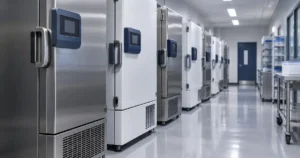
Learn where to place probes, buffer solutions and alarm thresholds for monitoring ultra-low freezers at minus 80 with Swift Sensors.

 Ray Almgren
Learn where to place probes, buffer solutions and alarm thresholds for monitoring ultra-low freezers at minus 80 with Swift Sensors.
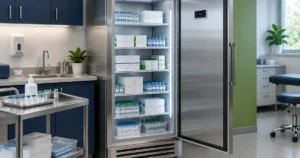
Vaccine storage requirements for clinics in one checklist: CDC storage unit rules, vaccine refrigerator requirements, data logger specs and VFC compliance.
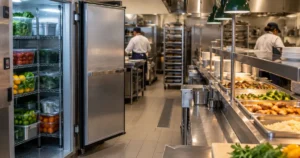
Learn how automated temperature alerts and the food code intersect, what inspectors accept as valid records, and how to document corrective actions.
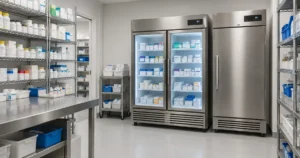
Learn the most common Joint Commission medication storage temperature findings and how to close them with corrective action steps and continuous monitoring.
Sensor drift is predictable, which is why annual-only calibration leaves a gap between checks. See how continuous monitoring closes it.

School holidays shouldn’t require driving up to check walk-in temps. Reduce manual checks and ensure compliance with remote temperature monitoring solutions.

School holidays shouldn’t require driving up to check walk-in temps. Reduce manual checks and ensure compliance with remote temperature monitoring solutions.
A vaccine refrigerator out of range overnight doesn’t always mean discarding doses. Follow the CDC-aligned steps, then prevent the next excursion.
If your sensor and your thermometer disagree by ten degrees, learn what causes the gap and how to fix inaccurate temperature readings.
A customer got sick and you cannot prove the cooler held? Learn what temperature records protect your restaurant during a health department investigation.
3001 Bee Caves Rd Ste. 100
Austin, TX 78746
512-256-7552
