
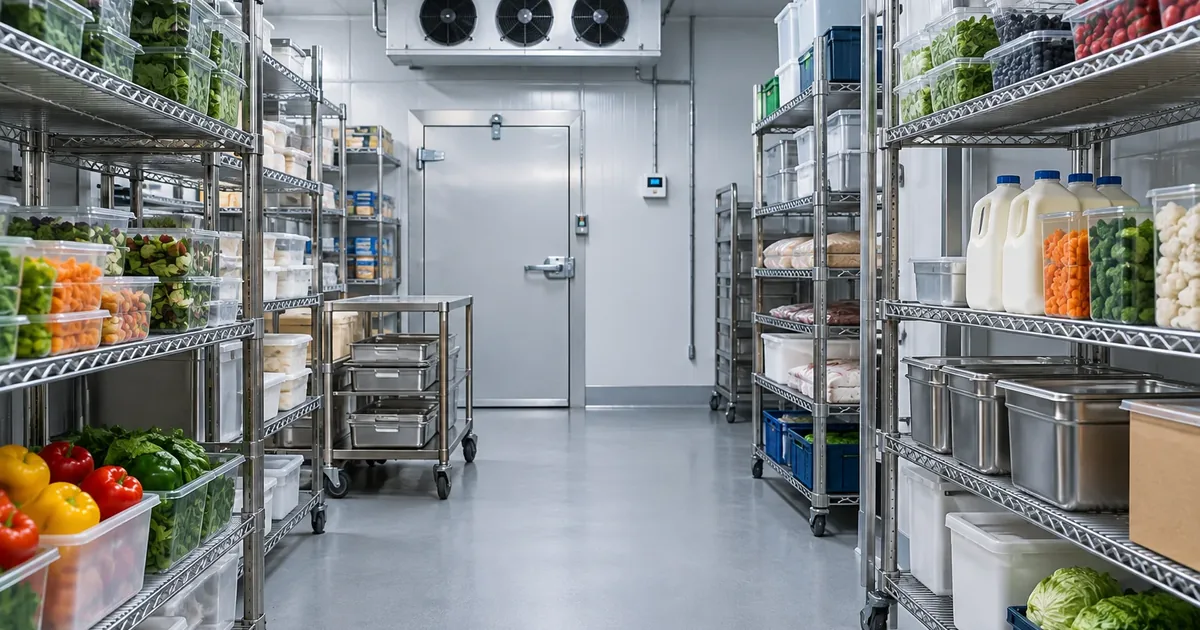
When your sensor and your thermometer disagree by ten degrees, it rarely means one device is broken. In most walk-in coolers, labs, and kitchens, the gap traces back to where each device sits, how it measures air, or when it was last checked. Continuous wireless temperature sensors make that gap easy to diagnose instead of guess at.
By Kevin Keithley, Director of Marketing, Swift Sensors
Common Reasons Your Sensor and Your Thermometer Disagree by Ten Degrees
A wireless temperature sensor and a handheld thermometer do different jobs. The sensor sits in place and logs a reading every few minutes to the Swift Sensors Cloud Console. A thermometer is a spot check: someone opens the unit, holds it near the product or the air, waits for the display to settle, then reads the number. Both instruments can be accurate and still disagree, because they sample different air at different moments, so a facility can end up with two readings for what should be the same conditioned space.
Unlike a home thermostat, which reads the room it sits in and adjusts a building's HVAC accordingly, a commercial sensor monitors a specific asset, like a reach-in cooler or a medication refrigerator, not the comfort of the surrounding room. A weather app's outdoor temperature is not a measurement of your walk-in cooler's indoor air, so comparing a sensor to a phone app instead of a second calibrated device tells you nothing useful.
How Sensor and Probe Placement Causes False Temperature Readings
Placement explains most of the disagreement operations teams see. A sensor mounted near a door, an evaporator fan, or a loading dock catches drafts of warmer air every time the door opens, while a thermometer checked at the back of the same shelf reads several degrees cooler. Direct sun, wind from a nearby fan, or even a few feet of distance between the two devices can affect the reading. None of that means either device is wrong, it means they are not measuring the same spot.
Why Your Sensor Reads Different Temperatures in Different Spots of the Same Unit
Cold air sits low and heat rises, so a walk-in cooler or freezer rarely holds one uniform temperature. The zone near the door or the compressor usually sits several degrees higher than the back corner near the evaporator coil. A sensor in one spot and a thermometer in another will disagree even when both work as designed. That is normal stratification, not device error.
Which Is More Accurate, a Wireless Temperature Sensor or a Handheld Thermometer
Neither device wins by default. A properly maintained sensor and thermometer are both capable of accurate readings within a degree or two of true air temperature. The real advantage of continuous monitoring is coverage, not raw accuracy: a sensor reads every few minutes around the clock, while a thermometer only knows the temperature at the moment someone checks it. That gap is where an excursion goes unnoticed until a spot check catches it hours later. Refrigeration monitoring closes that gap by keeping a continuous, timestamped record instead of a handful of daily snapshots, and it applies instant alerts via email, SMS, or phone call the moment a reading moves out of range.
How Much Temperature Difference Between a Sensor and Thermometer Is Normal
A one to three degree offset is common, usually traceable to placement or response time. A ten degree gap is well outside normal drift and usually points to a placement problem, a probe issue, or overdue calibration, not measurement noise.
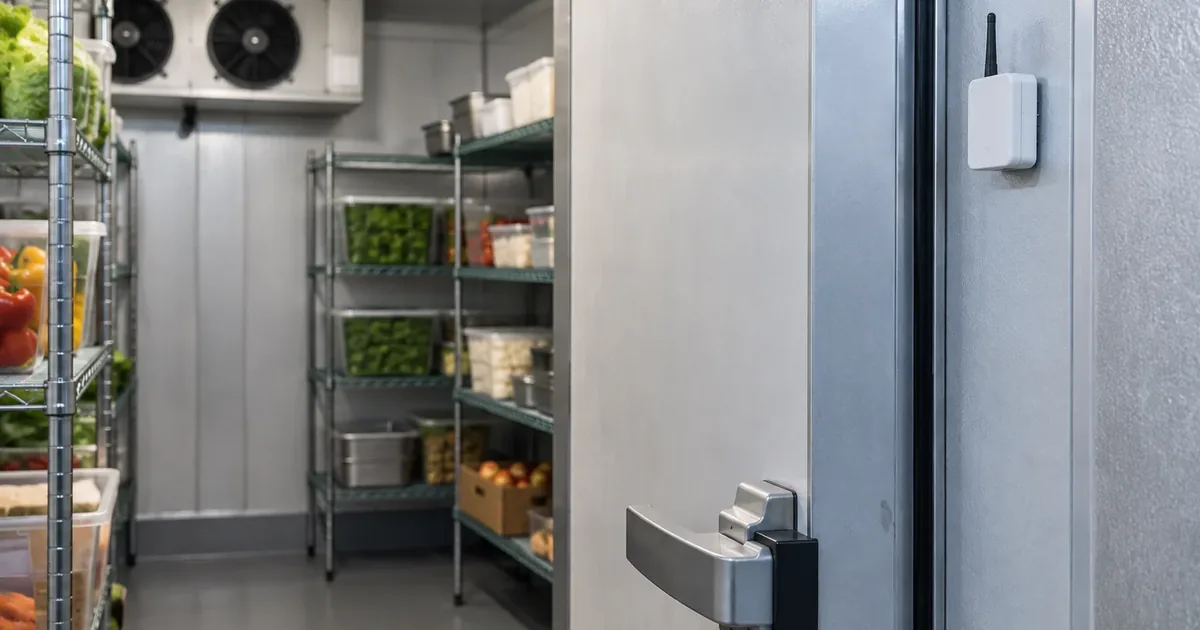
How to Tell if Your Temperature Sensor Needs Calibration
A sensor usually signals it needs calibration in one of three ways: a consistent offset in the same direction every time you check it against a known reference, a sudden jump after a battery change or a bump, or a gap against a separate thermometer that grows wider over several weeks. Any of those patterns is worth investigating before you trust either number. Swift Sensors offers NIST calibration through an independent ANAB ISO 17025:2017 accredited laboratory, which gives you a traceable reference point instead of guessing which device drifted. Documenting temperature sensor calibration dates also gives an auditor reviewing your HACCP records the evidence they usually ask for.
How Often Should a Temperature Sensor Be Calibrated
There is no single interval that fits every environment. An annual calibration check is often enough for a low-risk storage area, while a pharmacy refrigerator, a vaccine unit, or a lab freezer tied to regulatory compliance usually needs a shorter cycle. Check the manufacturer's calibration guidance and your accrediting body's requirements, and when in doubt, ask your quality or compliance lead rather than assuming last year's schedule still applies.
How Do You Test if a Thermometer Is Reading Correctly
Two simple field checks catch most bad thermometers. The ice bath test packs a cup with ice and a little water, waits a few minutes for it to settle near 32 degrees Fahrenheit, then checks the thermometer against that known point. The boiling point test does the same at 212 degrees Fahrenheit at sea level, adjusting for altitude. A thermometer that reads more than a degree or two off in either test needs adjustment or replacement.
How to Fix a Sensor and Thermometer That Keep Disagreeing
Work through this in order rather than replacing hardware first. Rule out placement before you touch calibration: confirm both devices are reading the same air, since a sensor and a thermometer a few feet apart, one near the door and one against the back wall, will disagree no matter how well calibrated they are. Check the sensor's mounting for airflow, sun exposure, or proximity to the evaporator fan, and move it if needed. Pull the sensor's history in the Cloud Console and look for a consistent offset rather than a random spread; a steady, repeatable gap is usually a calibration fix, not a hardware failure. If the offset holds after calibration, apply a documented correction factor. When the two still disagree by ten degrees after placement and calibration are ruled out, replace the weaker instrument, usually the handheld thermometer, since it sees more wear than a fixed sensor.
Is a 10 Degree Temperature Difference a Food Safety Risk
It can be, depending on which reading is correct and where the unit sits relative to food safety limits. The FDA Food Code sets cold holding at 41 degrees Fahrenheit and below and hot holding at 135 degrees Fahrenheit and above, so a real 10 degree excursion around either threshold is a genuine risk to product safety, not a rounding error. A 10 degree difference between two devices is not automatically a 10 degree error in the product itself, but it does mean you cannot trust either number until you know which one is right. Continuous monitoring across food service and cold storage operations removes that uncertainty by giving your team one always-on, alerted reading instead of two disagreeing spot checks, so a real excursion triggers an alert the moment it happens, not at the next manual check.
Which Reading Should You Log for HACCP, the Sensor or the Thermometer
Most HACCP (Hazard Analysis and Critical Control Points) plans specify which instrument is the system of record, and that is usually the calibrated, continuously logged sensor reading rather than an occasional manual check, since it is the one your plan can audit and timestamp automatically. If your written plan does not yet specify one, that is a gap to close with your quality lead, not a decision to make during an inspection. When the two devices disagree at the moment of a manual check, log both numbers and the discrepancy rather than picking one and discarding the other.
Frequently Asked Questions
Can a sensor and a thermometer ever match exactly?
Rarely, and that is normal. The two devices sample air at different points and moments, so a small, steady offset of a degree or two is expected. What matters is whether the gap stays consistent or grows, since a growing gap usually points to calibration drift or a placement change rather than a flaw in either device.
Does placing a sensor near a door or vent affect its reading?
Yes. Airflow from an open door, an evaporator fan, or an HVAC vent changes the local air temperature around a sensor faster than it changes the temperature of the stored product. Moving the sensor away from direct airflow, and away from direct sun if the unit sits near a window, usually brings the reading closer to what a thermometer shows deeper in the unit.
Is a small, steady offset ever worth fixing?
If the offset is small, consistent, and documented, many teams apply a correction factor instead of replacing hardware. It only becomes worth chasing when it grows over time, shows up inconsistently, or approaches a range that would change a food safety or compliance decision.
Should I trust the sensor reading or the physical thermometer during an inspection?
Whichever one your written HACCP or quality plan names as the system of record, usually the continuously logged sensor reading in the Cloud Console, since it carries a timestamp and an audit trail a manual reading does not. If your plan does not specify one, treat that as an open item to resolve with your quality lead before the next inspection.
See One Reliable Reading Instead of Two Disagreeing Ones
If your team keeps splitting the difference between a sensor and a thermometer, continuous monitoring removes the guesswork and gives you one auditable number instead of two. See what continuous restaurant temperature monitoring looks like for your kitchen or walk-in, and get a clear picture of where your current setup has gaps before your next inspection.

