
Joint Commission Temperature Monitoring for Survey Readiness

Joint Commission temperature monitoring is judged on a day you do not choose. A surveyor can open any medication refrigerator in your hospital or pharmacy, read the display, and ask the nurse or technician standing nearby what happens when that number is out of range. The answer depends on records that were kept every hour of every night for months before the visit, and a paper log with a missed weekend or an unexplained excursion is exactly where that conversation goes wrong.

Swift Sensors replaces manual checks with continuous wireless monitoring of every medication refrigerator, freezer and storage room, logging each reading to the Swift Sensors Cloud Console. When a unit drifts out of range, instant alerts reach the right people via email, SMS, or phone call so they can act before medications are compromised, day or night. Temperature histories, alarm events and compliance reports are available on demand, from any device, for every unit in every department. Swift Sensors monitoring does not replace your policies or your pharmacy’s oversight. It gives your team the continuous, documented record that makes Joint Commission readiness a daily habit instead of a scramble before the survey window opens.

What Joint Commission Temperature Monitoring Covers

Hospitals often search for a single set of Joint Commission refrigerator standards, and the standards do not work that way. The Joint Commission’s medication management standards expect medications to be stored under the conditions the manufacturer specifies and according to the organization’s own written policies. They do not publish one required thermometer, one logging schedule or one alarm setting for every facility. That leaves each hospital to define how it meets the expectation, and then to prove that it follows its own policy.

In practice, the Joint Commission standards for temperature monitoring are read through that policy.

Surveyors typically look for

Joint Commission medication refrigerator standards sit alongside environmental expectations. Surveyors can also ask about temperature and humidity in areas such as sterile supply storage and procedure rooms, where many hospitals set their ranges from ASHRAE Standard 170. Joint Commission temperature and humidity questions are answered the same way as refrigerator questions: with a defined range, a continuous record and a documented response to anything outside it. Requirements change and vary by program, so always confirm the current standards for your accreditation program with your accreditation or quality team.

Medication Refrigerator Temperature Range and Requirements

The widely published medication refrigerator temperature range is 2°C to 8°C (36°F to 46°F), the same range the CDC publishes for refrigerated vaccines. It is a starting point, not the rule for every product. The manufacturer’s label and package insert govern each medication, and some products require a narrower range or frozen storage. Your policy should name the range for each unit based on what it holds.

Medication refrigerator temperature range
2°C to 8°C
36°F to 46°F

The manufacturer’s label and package insert govern each medication.

Medication refrigerator requirements vary by organization and state, but most hospital and pharmacy policies share the same foundations:

01

A purpose-built medical or pharmacy refrigerator, used only for medications, with no food or specimens stored inside.

02

Medications kept away from the walls, the cooling vents and the door shelves, where temperatures swing the most.

03

Continuous medication refrigerator temperature monitoring, with minimum and maximum readings reviewed on the schedule your policy sets.

04

An alarm that reaches someone who can respond at any hour, and a written plan for moving medications if a unit fails.

05

A calibrated monitoring device, with the calibration certificate on file.

Searches for CDC medication refrigerator requirements usually land on the CDC Vaccine Storage and Handling Toolkit. Its detailed requirements are written for vaccines, including digital data loggers with a buffered probe, and many hospitals apply the same practices to all medication refrigerators because they are clear, published and easy to audit. Swift Sensors offers a glycol thermal buffer bottle for its probe sensors, a type of buffer the CDC and others have long recommended to reduce false alarms caused by door openings.

Joint Commission Refrigerator Temperature Monitoring, Unit by Unit

Best Wireless Sensors For Joint Commission Readiness

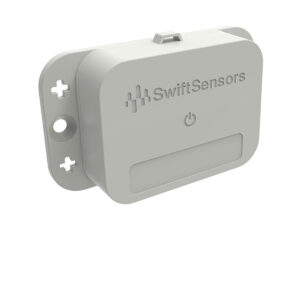
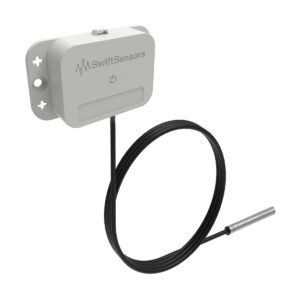
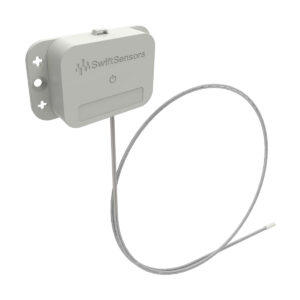
Medication refrigerator temperature monitoring starts with the right sensor in the right spot. The SS3-105S places a stainless steel probe inside the refrigerator, and it can sit in a glycol thermal buffer bottle so readings reflect the temperature of the medications rather than a brief rush of air when the door opens. The SS3-101 measures ambient temperature and humidity in storage rooms and sterile supply areas. The SS3-110 covers ultra-low freezers down to -100°C. Thresholds, schedules and alerts are customized in the Swift Sensors Cloud Console, so a routine restock does not trigger the same response as a failing compressor. Every sensor can be NIST calibrated through an independent ANAB ISO 17025:2017 accredited laboratory.

A Joint Commission Readiness Checklist

Joint Commission survey readiness is easier to keep than to rebuild. Use this list to check your temperature program before the next survey window opens:

How Swift Sensors helps

Swift Sensors helps document most of that list automatically. The Cloud Console keeps the continuous record for up to 5 years, sends instant alerts by email, SMS, or phone call to individuals or groups, and escalates through alert tiers when nobody responds. Staff can attach notes to the measurement graph, the alert record and the alert acknowledgement, so each excursion carries its cause, response and outcome. Compliance reports, including the Daily Extremes report of each unit’s minimum and maximum, are generated on demand. The Console’s Calibration Report shows when each sensor is due for recalibration, and an audit trail records user actions in the account. Your policies, your response procedures and your staff training remain your own, and no monitoring system can guarantee a survey outcome.

Swift Sensors offers NIST Calibration Services

NIST Calibration Services

Swift Sensors offers NIST Calibration services through an independent ANAB ISO 17025: 2017 accredited laboratory. Swift Sensors manages all calibration logistics prior to initial sensor delivery and ensures seamless annual calibration renewal.

FAQ

The widely published range for refrigerated medications and vaccines is 2°C to 8°C (36°F to 46°F), and the CDC recommends aiming for about 5°C (40°F) for refrigerated vaccines. The manufacturer’s label always governs, so check the package insert for each product and set each unit’s alert thresholds in the Swift Sensors Cloud Console to match.

The Joint Commission expects medications to be stored as the manufacturer specifies and according to your own policies, and it looks for evidence that the policy is followed. Continuous monitoring is not the only way to meet that expectation, but it removes the gaps that manual logs leave overnight and on weekends, and it records every excursion automatically.

Surveyors commonly check the current temperature, review recent records, and ask staff what they do when a unit is out of range. They look for documented corrective action on past excursions and for calibrated monitoring devices. Swift Sensors temperature histories, alarm events, corrective action notes attached to each alert, and compliance reports help your team answer those questions with records rather than recollection.

The CDC’s detailed storage requirements are published for vaccines, and they are mandatory for providers enrolled in the Vaccines for Children program. Many hospitals apply the same practices, such as dedicated units, buffered probes and continuous data logging, to all medication refrigerators. Your pharmacy and quality teams decide which practices your policy adopts.

No monitoring system can. Joint Commission temperature monitoring is one part of a survey, and the outcome depends on your policies, procedures and staff. Swift Sensors supports readiness with continuous, calibrated records, instant alerts and on-demand reports that show how each unit performed between surveys.

A Swift Sensors system requires the purchase of at least one gateway, at least one sensor, and a monitoring plan.

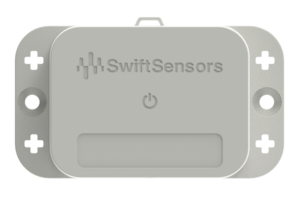
  • Swift Sensors wireless sensors measure temperature, humidity, door activity, water leaks and other critical conditions. Each sensor is smaller than a credit card and has battery life of 6-8 years. The sensor transmits data via Bluetooth 5 (BLE5) and connects to the gateway with a push of a button.
  • The gateway receives data from each sensor and then transmits the data to the cloud console via local ethernet, WiFi, or cellular network (optional module). Each gateway supports up to 150 sensors within 100 m line of sight (30 m non line of sight).
  • The monitoring plan is very simple. The fee is based on the number of sensors you deploy. You can pay monthly, annually, or multi-year. There are no contracts required. View real-time analytics, download compliance reports, and receive instant mobile alerts on any device.

The sensor range is up to 100 m line of sight and 30 m non line of sight depending on the facility infrastructure and equipment located between the sensor and the gateway. The sensors use the BLE5 wireless communication protocol which allows signal transmission through doors and walls constructed of standard building materials.

Each sensor uses two AAA lithium polymer batteries with an average lifespan of 6-8 years.  Replacement batteries are readily available at hardware stores and various retail locations.

The monitoring plan is very simple. The fee is based on the number of sensors you deploy. You can pay monthly, annually, or multi-year. There are no contracts required.

The Swift Sensors Console is a robust cloud-based monitoring, alerts, and reporting platform viewable remotely on any device. The Console is used for hardware setup and system configuration. The Console presents analytics that provide trend analysis, historical documentation, compliance reporting, and deep insights into equipment performance, facility operations, and environmental conditions. The platform is customizable and adaptable to any industry with unparalleled ability to search, filter, sort and view critical measurement and performance data. Configurable instant alerts enable immediate corrective actions when significant events occur. Alerts can be sent to individuals or groups via SMS text, email, or voice.

The Swift Sensors monitoring, alerts, and reporting platform was developed and is maintained by industry experts with extensive experience in network security. Sensor to gateway communication utilizes BLE5 and 128-bit AES encryption. Gateway to cloud Console communication utilizes ethernet, WiFi, or cellular (optional module) and 256-bit AES encryption. Data is securely transmitted over Secure Sockets Layer (SSL) on port 443. The Swift Sensor network does not allow any outside communication. As a result, the Swift Sensor network is incredibly secure.

Swift Sensors only communicate with Swift Sensors gateways. Swift Sensors gateways only communicate with the Swift Sensors Console. The Swift Sensor network does not allow any outside communication. As a result, the Swift Sensor network is incredibly secure. The Swift Sensor Console, however, features a robust API which can be utilized to communicate with 3rd-party applications.

Get a quote or a demo

See Swift Sensors on Your Medication Refrigerators

Share how many medication refrigerators, freezers and storage rooms you need to cover. A Swift Sensors specialist will follow up with a quote, a walkthrough of the Cloud Console, or answers to your questions.

  Prefer to talk? Call 512-256-7552

Ask a Question • Get a Quote • Request a Demo

Contact Us