
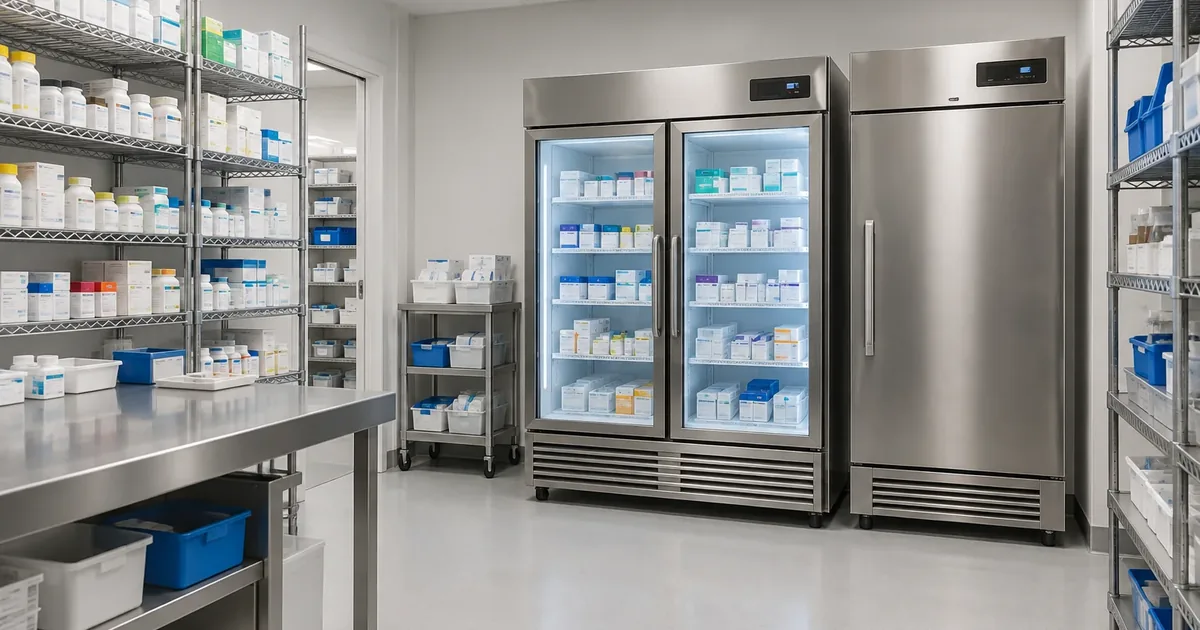
Joint Commission medication storage temperature findings and how to close them start with knowing what surveyors actually cite: temperature excursions in medication refrigerators and freezers, missing logs, and documentation gaps. Closing a citation requires a corrective action plan built around continuous pharmacy refrigeration monitoring, not a scramble before the next survey.
By Kevin Keithley, Director of Marketing, Swift Sensors
Common Joint Commission Findings for Medication Storage Temperature
Surveyors reviewing medication storage areas tend to write up the same handful of problems: a refrigerator temperature log with gaps or entries filled in all at once, refrigerators and freezers that went out of range with no documented follow-up, thermometers that were never calibrated or verified, and expired or compromised medication left in a unit that had already gone out of range. Repeat findings signal a gap in your systems rather than a one-time slip. Surveyors are not just checking a thermometer reading, they are checking whether your team has a reliable, documented process behind it.
RFI vs Condition-Level Findings, What's the Difference?
A Requirement for Improvement (RFI) is the standard citation issued when a specific Joint Commission standard is not met, and it comes with a defined window to submit corrective evidence. A Condition-level finding is more serious. It ties back to a Medicare Condition of Participation and signals a pattern or severity that puts accreditation, and in some cases deemed status, at risk. A single refrigerator that goes out of range, with a documented and timely response, usually stays at the RFI level. A pattern of unaddressed excursions across multiple units, or an excursion involving medications that were then used, can escalate the finding. The category sets how urgently your corrective action plan needs to move.
Why Out-of-Range Temperatures Trigger a Citation
The Joint Commission cites medication storage temperatures that fall out of range because a temperature excursion can compromise the safety and efficacy of the medications, vaccines, and reagents stored inside. Surveyors are verifying that the organization has a system in place to catch a problem before it reaches a patient, and when a log shows a gap, or a unit went out of range with no documented response, they cannot confirm that anything caught the problem. That gap between what happened and what was documented is usually the real finding.
What Temperature Range Does the Joint Commission Require for Medication Storage?
The Joint Commission does not publish one universal number. It expects your organization to store medications within the range set by the manufacturer and your pharmacy's policy, and to be able to prove it stayed there. In practice, most refrigerated medications and vaccines are stored between about 36 and 46 degrees Fahrenheit (2 to 8 degrees Celsius), with frozen products following a separate manufacturer-specified range. Because the correct range varies by product, confirm the exact figures with your pharmacist or the manufacturer's storage instructions.
How Often Should Medication Refrigerator and Freezer Temperatures Be Checked?
There is no single frequency the Joint Commission mandates for every organization. Many facilities check and log manually once or twice per shift, or at least daily, which means the gaps show up overnight, on weekends, and during short-staffed periods when a check gets missed. What the Joint Commission does expect is that whatever frequency your policy sets, it actually happens and gets documented every time. That consistency requirement is exactly where continuous, automated readings have an advantage over a person walking the unit on a schedule.
Documentation the Joint Commission Requires for Temperature Monitoring Logs
Logs need to be complete, contemporaneous, and specific. A complete log has no missing entries. A contemporaneous log is filled in at the time of the reading, not reconstructed the day before a survey. A specific log documents not just the reading but what happened when a reading went out of range: who was notified, what action was taken, and when the unit returned to range. A log that records normal readings and goes silent during the excursion is incomplete. The same standard applies to an internal audit or a state health department inspection.
Does the Joint Commission Require Continuous Monitoring, or Are Manual Logs Enough?
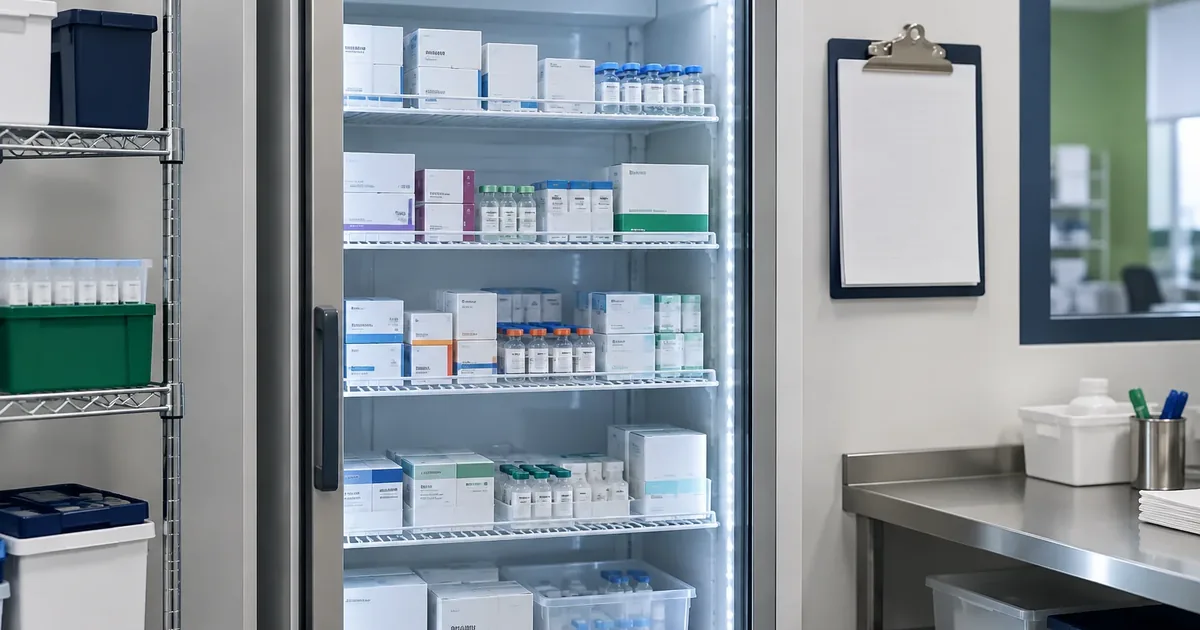
The Joint Commission does not mandate a specific technology. Manual logs are permitted, and plenty of organizations still use them. The problem is structural, not procedural: a manual log only captures a reading at the moment someone walks over and writes it down, which leaves every hour in between unverified. A unit can drift out of range at 2 a.m. on a Saturday and return to range before the next scheduled check, and the log will show nothing wrong even though medications sat outside their safe range for hours. Continuous visibility closes that gap. Facilities that move to hospital and clinic monitoring built on wireless sensors get instant alerts via email, SMS, or phone call the moment a unit goes out of range, instead of finding out at the next scheduled check or, worse, during the next survey.
Joint Commission Medication Storage Temperature Findings and How to Close Them: A Corrective Action Roadmap
A corrective action plan that closes a finding for good needs four things: a root cause, not a symptom; a specific process or equipment change, not a promise to "remind staff"; a named owner and date; and a way to prove the fix held over time. A plan that says staff will be retrained usually does not survive a follow-up review, because it does not explain why the gap happened. A plan that replaces a manual check with automated, continuous readings and documented alert thresholds gives the surveyor something concrete to verify.
How Long Do You Have to Close a Joint Commission Finding After a Survey?
For most standard-level findings, organizations usually have about 60 days from the end of the survey to submit their Evidence of Standards Compliance, though the exact window is always confirmed in your official survey report. Condition-level findings move on a much shorter timeline, and may require an interim action plan well before the standard deadline. Waiting until close to the deadline to start building your evidence leaves little room to fix a process that needs more than a policy edit.
What Evidence Should Be Included in an Evidence of Standards Compliance (ESC) Submission for Temperature Findings?
A complete evidence of standards compliance submission typically includes the updated policy or procedure, documentation of the specific corrective action taken, training records for affected staff, and a sample of logs or monitoring reports generated after the fix went live showing sustained, in-range performance. Evidence that only shows the fix happened once is weaker than evidence showing it held for weeks, and that sustained sample is easiest to produce when your monitoring system logs every reading automatically instead of relying on a paper form.
How Automated Temperature Monitoring Prevents Repeat Citations
Most repeat citations trace back to the same root cause: a gap in coverage that a manual process could not close. Wireless sensors paired with a gateway stay always on, reading continuously instead of at scheduled intervals, and reporting into the Swift Sensors Cloud Console where every reading, alert, and excursion is logged automatically. Staff can add notes to an alert record to document who responded and what they did, alerts escalate to the next person when the first does not respond, and user-level audit trails and electronic signatures show who reviewed each record. The Console also alerts when a gateway or sensor stops reporting, so a silent sensor does not become a gap in the log. That gives your team data-driven decisions instead of a guess about what happened overnight, and gives a surveyor a complete, timestamped record instead of a log with gaps to explain. When a power outage or other emergency hits, the alert reaches the right person while there is still time to move medical inventory.
What Happens If Medication Storage Temperature Findings Aren't Corrected in Time?
An uncorrected finding can trigger a follow-up survey, and in more serious cases can put accreditation status, and for hospitals, deemed status tied to Medicare participation, at risk. Beyond that, an uncorrected gap means your organization does not know whether vaccines, medications, and lab reagents have been compromised, which is a temperature control problem before it is a paperwork one.
Frequently Asked Questions
How often does the Joint Commission cite medication storage temperature deviations?
Temperature-related findings come up regularly in medication management reviews, largely because manual logging creates gaps that are easy for a surveyor to spot. Readings that go out of range with no documented follow-up are a recurring theme.
What's an acceptable temperature range for a vaccine refrigerator?
Most vaccine manufacturers specify a refrigerated range of about 36 to 46 degrees Fahrenheit (2 to 8 degrees Celsius), with some products requiring frozen storage at a separate manufacturer-specified range. Because ranges vary by product, confirm the exact figures with the manufacturer or your pharmacist rather than applying one number across every vaccine in storage.
Can manual temperature logs satisfy Joint Commission requirements?
Manual logs are permitted, and the Joint Commission does not mandate a specific technology. The risk is coverage, not paperwork: a manual log only captures the moment someone checks, leaving the hours in between unverified, which is what shows up as a finding when a unit drifts out of range between scheduled checks.
What happens during a Joint Commission survey follow-up review?
A follow-up review verifies that the corrective action described in your Evidence of Standards Compliance actually took effect and held over time. Surveyors typically look for sustained, in-range logs or monitoring data covering the period since the fix, not just a single compliant reading taken the day the change was made.
See How Continuous Monitoring Supports Your Next Survey
Facilities preparing for a Joint Commission survey, or closing out a finding from one, can start with Swift Sensors' Joint Commission readiness overview and get a clear picture of how continuous wireless sensors cover the gaps a manual log leaves behind. Reach out to Swift Sensors for a walkthrough of how the Cloud Console reporting looks for your specific units before your next survey window.

