
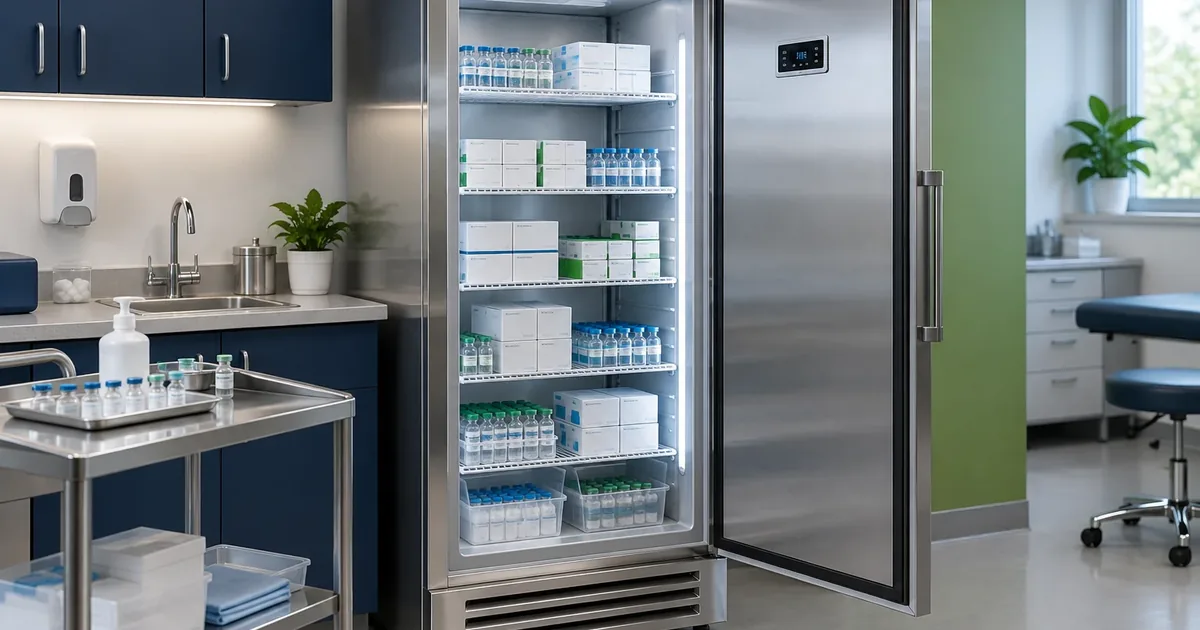
Vaccine storage requirements for a clinic come down to three things: a storage unit built to hold vaccines at a steady temperature, continuous temperature monitoring with a calibrated digital data logger, and records that prove it. Miss one and a single overnight temperature excursion can cost an entire refrigerator of doses before anyone notices.
By Kevin Keithley, Director of Marketing, Swift Sensors
What Are the Vaccine Storage Requirements for a Clinic?
Vaccine storage failures rarely announce themselves. A door left ajar after the last patient, a compressor that starts cycling badly, a power outage on a holiday weekend: by the time someone opens the unit, the damage is already underway. That is why CDC vaccine storage and handling guidance treats storage as a system rather than a single appliance.
For most clinics, the core vaccine storage requirements are:
- The right storage units. Purpose-built or pharmaceutical-grade units, or a stand-alone refrigerator and a stand-alone freezer, sized for the clinic's peak inventory.
- The right temperatures. Refrigerated vaccines stored between 2 and 8 degrees Celsius (36 to 46 degrees Fahrenheit). Frozen vaccines stored between minus 50 and minus 15 degrees Celsius, per the CDC Vaccine Storage and Handling Toolkit and the manufacturer's package insert.
- Continuous temperature monitoring. A digital data logger in every storage unit, plus a backup logger ready if one fails or goes out for calibration.
- Documentation. Current, minimum and maximum temperatures reviewed and recorded at the start of each workday, with the full temperature history kept on file. CDC recommends keeping temperature records for at least three years.
- A written plan. Routine and emergency storage handling procedures, named staff responsible for them, and a documented response to every temperature excursion.
Requirements for vaccines stored under a public program can be stricter, so the CDC toolkit is the floor, not the ceiling.
What Are the Vaccine Refrigerator Requirements, and Which Storage Units Qualify?
The vaccine refrigerator requirements start with the unit itself. CDC guidance prefers purpose-built or pharmaceutical-grade storage units, because they hold a consistent temperature from shelf to shelf and recover faster after the door opens. Pharmaceutical-grade vaccine refrigerators use refrigeration designed around a narrow band, not the wide swings a kitchen fridge tolerates. Stand-alone household refrigerators and freezers can be acceptable. A dormitory-style or bar-style combination unit with a freezer compartment inside the fridge should never be used for vaccines, because its temperature control is too uneven.
When a clinic compares models, a few features matter more than capacity alone:
- Temperature control and cooling. Fan-forced cooling keeps conditions even. A unit that runs cold near the back wall and warm near the door creates hot and cold spots the thermostat never sees.
- Space. Enough room to store vaccines in their original packaging, away from walls, vents and the floor, with space for air to circulate.
- Door behavior. A self-closing door or a door alarm helps prevent the most common cause of a slow warm-up.
- Placement. A well-ventilated spot away from heat sources, plugged directly into an outlet with a "do not unplug" label.
Whatever the model, practice matters as much as hardware. A good refrigerator still fails if staff typically store food in it, overload it before a flu clinic, or never check it on Monday morning after a quiet weekend.
What Temperature Monitoring Does CDC Vaccine Storage and Handling Guidance Call For?
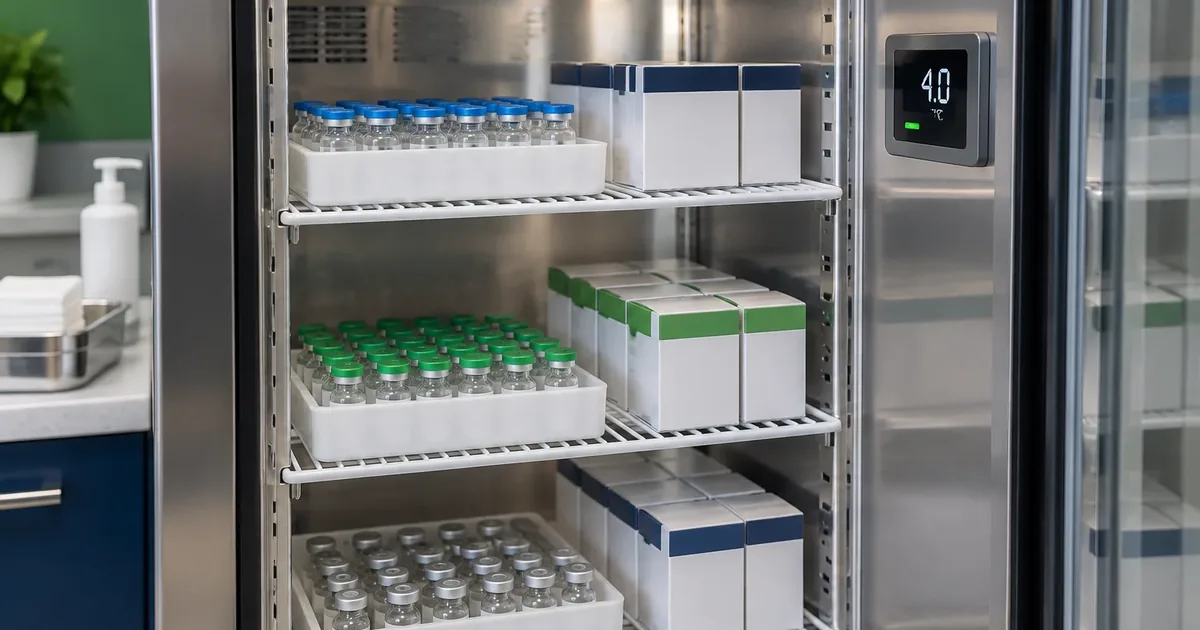
CDC vaccine storage guidance calls for a digital data logger (DDL) in every storage unit, because a glass thermometer read twice a day only shows two moments out of 1,440 minutes. A DDL records temperature data continuously so a clinic can see exactly when an excursion started and how long it lasted.
A DDL used for vaccine storage should have:
- A detachable probe in a buffered material, such as glycol or glass beads, so it reads the temperature a vial experiences rather than the air temperature every time the door opens.
- An alarm for out-of-range temperatures.
- A display of current, minimum and maximum temperatures.
- A low-battery indicator.
- Accuracy within plus or minus 0.5 degrees Celsius.
- Memory that logs at least every 30 minutes and stores the data for review.
- A current Certificate of Calibration Testing, traceable to NIST standards.
Wireless temperature sensors from Swift Sensors work alongside the digital data logger your program requires, not in place of it, adding what a stand-alone logger cannot: remote monitoring on any device, instant alerts via email, SMS, or phone call the moment a unit goes out of range at any hour, and compliance reports. Swift Sensors provides NIST Calibration through an independent ANAB ISO 17025:2017 accredited laboratory, and clinics should keep each certificate on file for inspections.
What Does VFC Compliance Add for Enrolled Clinics?
Clinics enrolled in the VFC (Vaccines for Children) program answer to the same CDC vaccine storage requirements, administered through state and local public health departments, plus program-specific rules. VFC compliance typically adds a backup DDL on hand, a certificate of calibration for every logger, a documented temperature check at the start of each clinic day, and records ready for a site visit.
Because VFC vaccines are publicly funded, an excursion that goes unreported can mean replacing doses and answering to the state program. Continuous monitoring with a time-stamped history helps ensure a clinic can show what happened, when, and what staff did about it. Every clinic should confirm current VFC requirements with its state coordinator, since the specifics vary by state and change over time. Swift Sensors' vaccine temperature monitoring adds remote alerts and that continuous record alongside the logger the program requires.
The Checklist to Run Before You Buy Monitoring
Once the storage units and the requirements are clear, choosing monitoring becomes a matter of matching each requirement to a feature. Before buying, confirm that the system:
- Covers every storage unit, refrigerator and freezer, with a sensor probe in a buffered bottle in each one.
- Alerts people, not just screens. Instant alerts reach whoever is on call nights, weekends and holidays, and escalate if the first person does not respond.
- Keeps data through an outage. Ask what happens to readings if the internet or power drops, and whether the gateway has backup power.
- Ships with calibration paperwork. Current, dated NIST-traceable certificates for every sensor, and a clear recalibration interval.
- Exports a full history on demand for a VFC site visit or an internal audit, rather than a snapshot.
- Scales with the clinic, so a second refrigerator or a new freezer is one more sensor, not a new system.
The best fit for most clinics is the simplest setup that covers every unit and reaches a person fast. A system built for a hospital lab may be more than a two-provider practice needs.
Frequently Asked Questions
What temperature should vaccines be stored at?
Refrigerated vaccines belong between 2 and 8 degrees Celsius (36 to 46 degrees Fahrenheit). Frozen vaccines belong between minus 50 and minus 15 degrees Celsius. Always check the manufacturer's package insert, since some products have narrower ranges.
Can a clinic use a household refrigerator to store vaccines?
A stand-alone household refrigerator can be acceptable under CDC guidance. A combination unit with a freezer compartment inside the fridge should not be used, because temperatures inside it are too uneven to protect vaccine potency.
How often do vaccine storage unit temperatures need to be checked?
CDC guidance calls for reviewing and recording current, minimum and maximum temperatures at the start of each workday. A continuous logger records between those checks, which is where most excursions happen.
How long should a clinic keep vaccine temperature records?
CDC recommends keeping temperature records for at least three years. State VFC programs may set their own retention period, so confirm with your coordinator.
Does continuous monitoring guarantee VFC compliance?
No monitoring system can guarantee compliance. Continuous temperature monitoring supports compliance by giving a clinic a complete, time-stamped record and instant alerts, which makes excursions easier to prevent and easier to document.
Protect Vaccine Inventory With Continuous Visibility
Vaccine storage requirements exist because temperature excursions can compromise safety and efficacy, and most of them happen when nobody is looking. Swift Sensors wireless sensors, a gateway and the Swift Sensors Cloud Console give a clinic continuous visibility into every storage unit, always on. See how cold chain monitoring supports clinics managing vaccine storage every day.

