
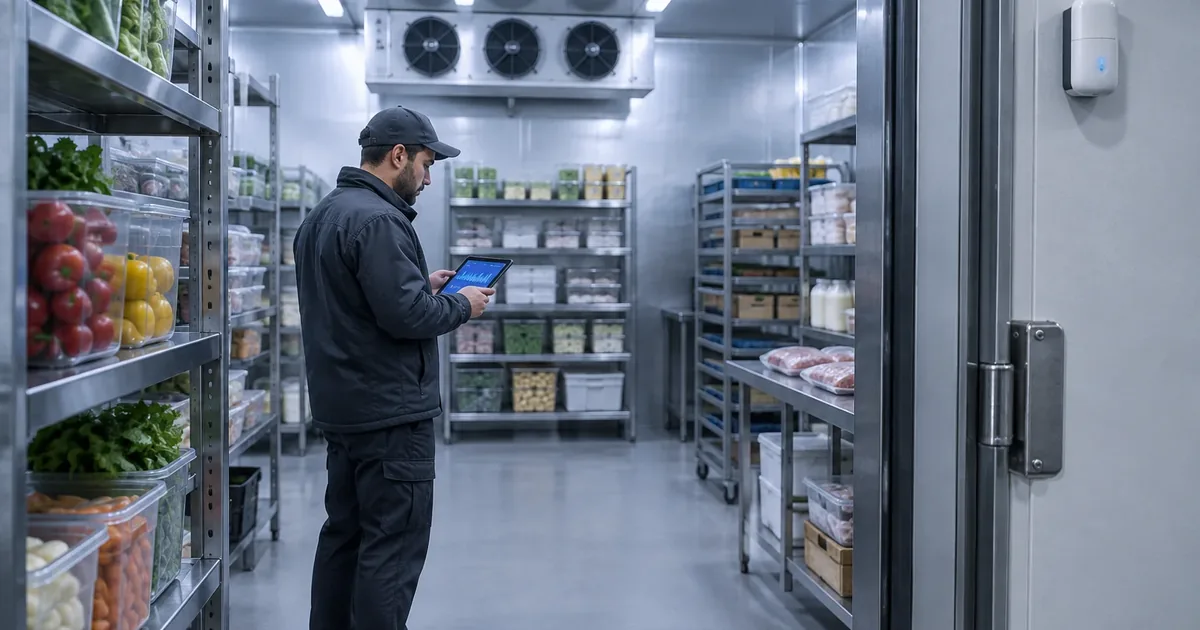
Sensor drift is predictable, which is why annual-only calibration leaves a gap that can run for months before anyone catches it. Wireless temperature sensors age at a known, gradual rate, and once you understand that curve, continuous monitoring becomes the practical way to catch drift between scheduled calibration events, not a replacement for calibration itself.
By Kevin Keithley, Director of Marketing, Swift Sensors
What Is Sensor Drift and What Causes It?
Sensor drift is the slow, gradual movement of a sensor's readings away from the true, calibrated value it was set against on day one. A probe that read 36 degrees Fahrenheit accurately at installation might read 37.4 degrees eighteen months later, with the physical environment unchanged. The reading has moved. The actual temperature hasn't.
Several things push a sensor toward drift over time. The measuring element itself ages: thermistors, thermocouples and RTDs all have expected drift rates built into their materials, and repeated cycling through temperature extremes accelerates the change. Contamination, moisture intrusion and mechanical stress on the probe housing add to it, and so does the accumulation of small offset errors, a common source of long-term bias, that were never fully zeroed out at the last calibration. Left unmanaged, that measurement error compounds every month the sensor goes unchecked. None of this is a defect. It's the physical behavior of a temperature sensor doing its job in real environmental conditions, and it's the reason a sensor calibration program exists in the first place.
Some sensors include temperature compensation circuitry meant to reduce small errors caused by ambient temperature swings, but compensation only corrects for known, modeled effects. It doesn't eliminate real calibration drift, which is why periodic correction against a traceable, calibrated reference is still necessary. Multi-point calibration checks accuracy at several points across a sensor's operating range, often at freezing, ambient temperature and an elevated reference point, so a single test at one temperature doesn't hide a bias that only shows up elsewhere in the range.
Temperature sensors carry the most weight in most facilities, because temperature-controlled assets, walk-in coolers, hospital pharmacy refrigerators, lab freezers, are usually the ones with the tightest tolerance for error. Humidity and air quality sensors drift too, and the same calibration logic applies to them, but the operational stakes of a temperature sensor drifting out of range unnoticed are typically higher and faster-moving.
Sensor Drift Is Predictable, Which Is Why Annual-Only Calibration Leaves a Gap in Coverage
Sensor drift is predictable, not random. Manufacturers publish expected drift rates for their sensing elements, and a sensor's own calibration history, the offset measured at each prior calibration, compared point to point, shows a consistent trend rather than a random walk. That predictability is exactly what makes annual-only calibration risky: if a sensor drifts at a fairly steady rate across its operating range, checking it once a year guarantees months of unmonitored drift between each check.
An annual calibration test confirms accuracy on the day it happens. It says nothing about the ten, eleven or twelve months on either side of that appointment. A sensor that reads correctly at a January calibration and drifts steadily afterward could be several degrees out of range by October, quietly recording out-of-range conditions as if they were stable, correct data. Annual-only calibration catches drift after the fact. It never catches a temperature excursion while it's happening, which is the whole point of pairing it with something that watches every day in between.
How Much Can a Sensor Drift Between Calibrations, and What Does That Put at Risk?
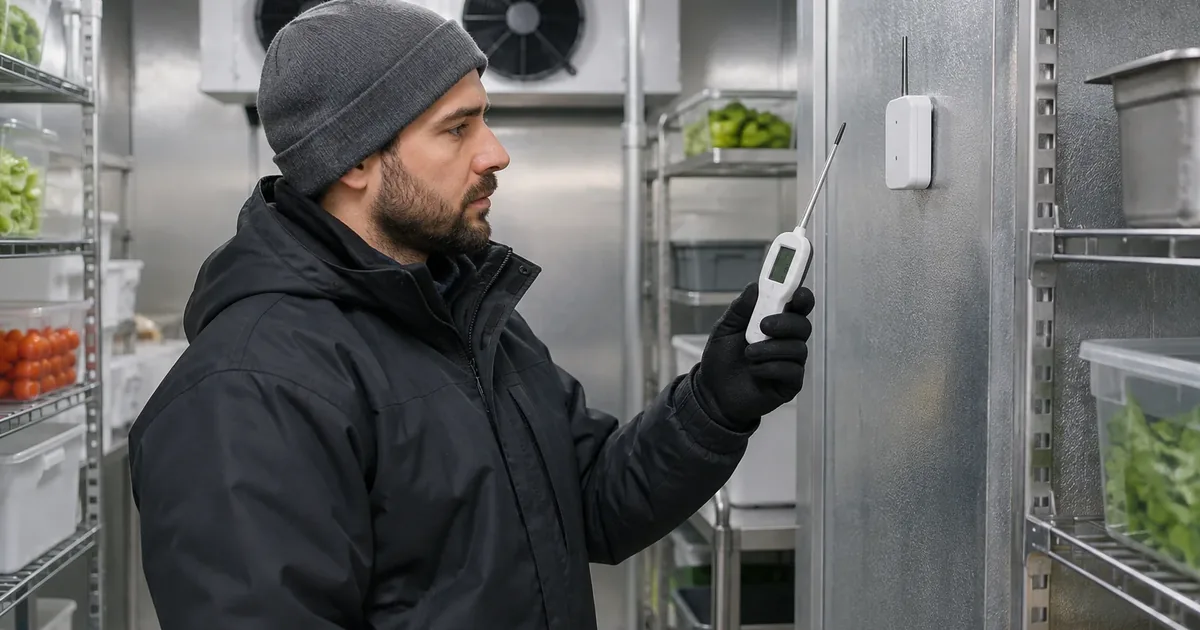
How much a sensor drifts between calibration cycles depends on the sensing element, the environment it's mounted in, and how hard it's been cycled, but a few degrees of drift in temperature readings over six to twelve months is common for sensors in active commercial or industrial use. In a walk-in cooler holding food at 41 degrees, a sensor drifting three or four degrees warm can report a compliant number right up until a manual spot check with a calibrated reference thermometer proves otherwise.
The risk isn't the drift itself. It's what an undetected temperature excursion costs while nobody's watching. Spoiled inventory, compromised vaccines or medications, a failed regulatory compliance inspection, and equipment run harder than it should be because nobody flagged a struggling compressor, are all downstream of the same root problem: a sensor quietly reporting stable, in-range numbers that no longer match reality. For food service and pharmacy operations, that same data quality gap can affect both regulatory compliance and product quality, since a decision made on drifted data is a decision made on bad information regardless of what the label says. In industrial monitoring generally, undetected drift also erodes confidence in the data itself, and once a team stops trusting its own readings, comparing this month's numbers to last month's becomes guesswork.
How Continuous Monitoring Closes the Gap Between Calibration Cycles
Continuous monitoring doesn't replace sensor calibration. It fills the calendar between calibration appointments with actual visibility instead of an assumption that nothing changed. Wireless sensors report readings continuously, so when a quick check against a calibrated reference thermometer, or against a second sensor in the same unit, shows an offset, the logged history shows when that offset started instead of leaving it to the next scheduled test. The Swift Sensors Cloud Console logs every reading against its expected operating range, and when a data point moves out of range, instant alerts via email, SMS or phone call go out immediately instead of waiting for the next audit.
That's the practical value of pairing scheduled calibration with environmental monitoring: calibration confirms a sensor is accurate on a known date, measured against a controlled reference standard, and continuous monitoring confirms the sensor is still behaving the same way every day in between. A longer drift time between calibrations makes that in-between visibility more valuable, not less, because there's simply more time for a slow bias to become a real temperature excursion. Facilities that run both together get always-on, data-driven decisions and continuous visibility instead of a once-a-year snapshot, with no disruption to daily operations. Swift Sensors provides NIST calibration services through an independent ANAB ISO 17025:2017 accredited laboratory, and the calibration cycle can be set shorter or longer than annual to match how hard a sensor works.
Frequently Asked Questions
How often should industrial sensors be calibrated?
Calibration frequency depends on the sensor type, what it's monitoring, and any regulatory requirements that apply to your facility, so there's no single universal schedule. Many industrial and commercial operations calibrate critical temperature sensors annually or semi-annually, with more frequent checks for can't-fail assets like vaccine refrigerators or pharmacy cold storage. Confirm the right calibration frequency with your compliance requirements and equipment manufacturer.
Can sensor drift be detected without taking equipment offline for calibration?
Yes, with a periodic spot check. Comparing the live reading against a calibrated reference thermometer, or against a second sensor in the same unit, shows an offset during normal use, and the continuous history shows when it began, without pulling the unit offline or interrupting service. It doesn't replace a traceable calibration, since only a direct comparison to a calibrated reference confirms true accuracy, but it gives your team an early warning that readings are drifting, well before the next scheduled test, with no disruption to daily operations.
What is an acceptable sensor drift tolerance before recalibration is required?
Acceptable drift tolerance varies by sensor type, industry standard and what's being protected. A vaccine refrigerator typically has a tighter tolerance than a general storage room. Many facilities set an internal threshold, often within a degree or two of the reference value for temperature, and treat anything beyond it as a signal for recalibration. Confirm your specific tolerance with your compliance guidelines or equipment manufacturer rather than a generic number.
Does more frequent calibration eliminate the need for continuous monitoring?
No. Sensor drift is predictable, which is why annual-only calibration leaves a gap that no calibration frequency alone fully closes, calibrating monthly instead of annually just makes the gap smaller, not zero. Continuous monitoring catches an excursion the moment it happens, between any two calibration dates, so the two approaches work better together than either does alone.
See Where Your Sensors Stand Between Calibrations
If it's been months since your last calibration, a quick review of your current temperature data can show whether drift is already creeping into your readings. Explore how continuous refrigeration monitoring keeps can't-fail assets like walk-in coolers and pharmacy refrigerators visible every day, not just on the day a technician shows up.

