
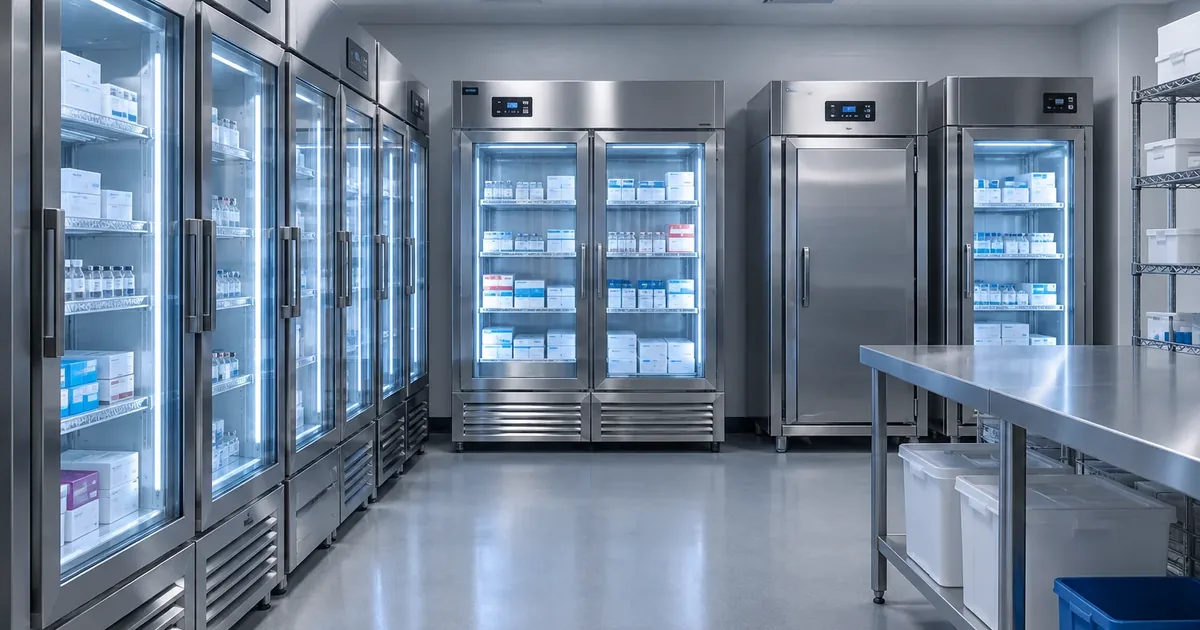
A vaccine refrigerator out of range overnight is a temperature excursion, and what you do in the first hour determines whether the doses are salvageable or must be discarded. Continuous cold chain monitoring catches most swings early, but when the alert comes anyway, follow these CDC-aligned steps: what to check, who to call, and how to document it.
By Kevin Keithley, Director of Marketing, Swift Sensors
Finding Your Vaccine Refrigerator Out of Range Overnight: What Counts as an Excursion?
A temperature excursion is any period a vaccine storage unit moves outside its required range, from a slow multi-hour drift to a hard failure that drops the unit ten degrees in twenty minutes. A practice that stores both refrigerated and frozen vaccines needs monitoring in each storage unit, and CDC guidance favors stand-alone refrigerators and freezers over combination units for exactly that reason.
What Temperature Range Counts as Out of Range for Vaccine Storage?
For refrigerated vaccines, the standard range is 2°C to 8°C (35.6°F to 46.4°F), often described simply as keeping the unit 2 to 8 degrees Celsius. For frozen vaccines, CDC guidance sets a range of minus 50°C to minus 15°C (minus 58°F to plus 5°F), and some products carry their own manufacturer-specific range. A unit reading 9°C for twenty minutes during restocking differs from one that sat at 15°C for six hours; both count as out of range, but the degree of deviation and the duration are what a manufacturer or health department needs before deciding whether the vials are still usable.
Your First Steps When You Discover the Vaccine Refrigerator Out of Range Overnight
Do not throw anything away and do not assume the vaccines are lost. The first steps protect the inventory until someone with the stability data makes that call.
- Close the unit and stop pulling doses. If the unit cannot hold its range, move the vaccines to a working storage unit as your emergency storage plan describes, and never pack vials directly against frozen ice packs.
- Label the affected vaccines "do not use" and physically separate them from usable stock so no one administers a dose from a lot still under review.
- Record the current temperature and pull the data from your min/max thermometer or data logger before resetting anything.
- Call your practice's vaccine coordinator or designated backup first. That person loops in the manufacturer, the state or local health department, and, for publicly funded stock, the VFC program.
How to Read a Min/Max Thermometer After an Overnight Excursion
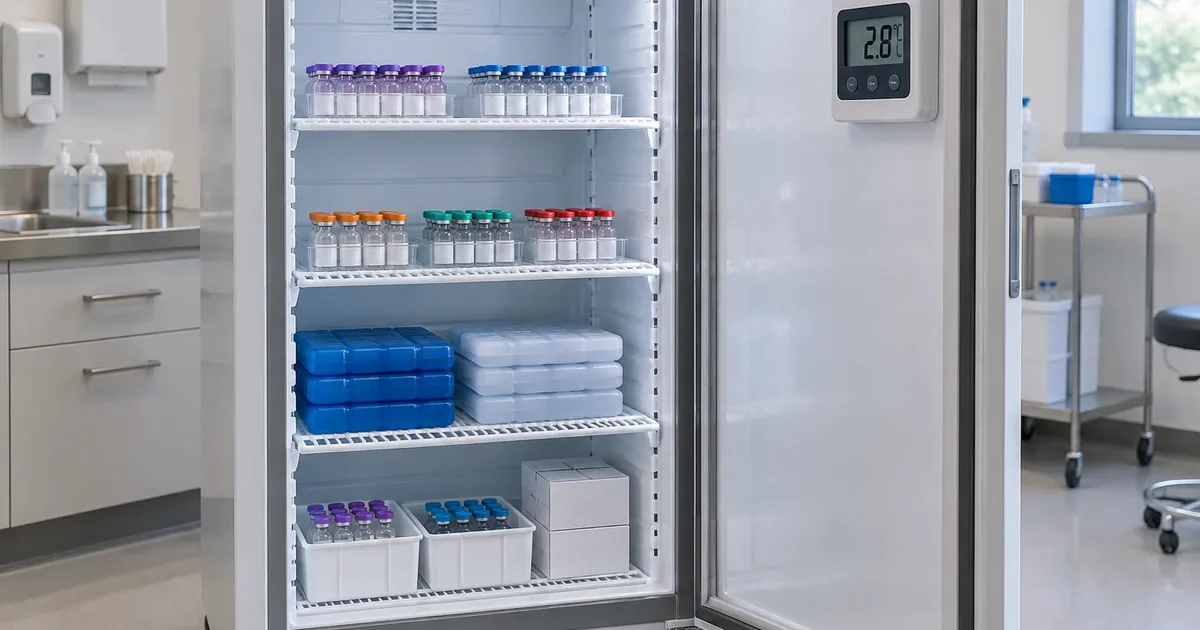
A standard min/max thermometer stores the lowest and highest temperatures the unit reached since it was last reset. Press the min button for the coldest point of the night and the max button for the warmest; write both down with the time, before you press reset. If your unit uses a continuous data logger instead, pull the full log rather than a single snapshot: manufacturers usually need the total time out of range, not just the peak temperature, to make a stability determination.
Do You Have to Discard Vaccines After a Temperature Excursion?
A vaccine refrigerator out of range overnight does not by itself mean lost inventory: the stock goes on hold pending a decision, not automatic disposal. Whether the affected doses can still be used comes down to a stability determination made by the manufacturer or, for VFC stock, confirmed with your state or local immunization program. Defaulting to discard-everything caution has its own cost: inventory a manufacturer would have cleared.
How Long Can Vaccines Be Out of Range Before They Must Be Discarded?
There is no single universal number. Manufacturers publish stability data specific to each product, and that data varies by how far outside 2°C to 8°C the unit drifted and for how long. A refrigerator one degree warm for two hours is treated very differently from one unplugged overnight. Until the manufacturer or health department reviews the min/max data, mark the stock do-not-use and hold it in proper storage.
Can Vaccines Still Be Used After an Excursion If the Manufacturer Says They're Stable?
In many cases, yes: manufacturers maintain stability data for this situation, and if the specific lot stayed within an acceptable range for an acceptable duration, the vaccines are typically cleared for continued use. Get that confirmation in writing or as a documented call reference, and keep it with the lot. Because an excursion can still compromise a temperature-sensitive lot's safety and efficacy, the manufacturer, not the front desk, makes the final call.
Reporting and Documenting a Vaccine Temperature Excursion
Two records happen after every excursion: telling the people who can make the stability call, and building the paper trail your program will ask for later. Facilities storing vaccines through the VFC program face documentation requirements beyond what a private-pay practice might keep.
How Do You Report a Vaccine Temperature Excursion to the Manufacturer and Health Department?
Contact the manufacturer directly, using the phone number on the product's storage and handling guidance, and have the lot numbers, the min and max temperatures, the duration out of range, and the current temperature ready before you call. For vaccine purchased through the Vaccines for Children program, also notify your state or local VFC coordinator, since publicly funded doses carry separate reporting requirements. Your health department may also want a report for a large-volume or facility-wide refrigeration failure.
How Do You Document a Temperature Excursion for VFC and State Compliance?
Keep a single excursion log entry with the date and time the unit went out of range, the date and time it was discovered, the min and max temperatures, total duration out of range, the vaccines and lot numbers affected with quantities, who was contacted, the manufacturer's or health department's determination, and the final disposition of the stock. The CDC's Vaccine Storage and Handling Toolkit outlines this same set of fields, and most state immunization programs use a version of it during VFC compliance reviews. A gap in any field is usually what an auditor flags first, so record it the same day, not from memory.
What Usually Causes Overnight Excursions, and How Do You Prevent Them Happening Again?
Most vaccine refrigerators and freezers that go out of range overnight fail quietly, not dramatically. The usual causes: a power outage that outlasted the unit's thermal buffer, a door not fully latched at closing, a worn gasket that no longer seals, a unit packed too tightly for air to circulate, or a compressor nearing the end of its life. Any of these can happen without anyone noticing until morning, turning a fixable problem into a discarded-inventory problem.
The fix is not a stricter closing checklist alone, since a checklist cannot catch a compressor failure at 1 a.m. Wireless temperature sensors paired with instant alerts via email, SMS, or phone call close that gap: the moment the unit drifts out of range, whoever is on call finds out in minutes instead of at opening. That difference usually separates a short, well-documented excursion with vials confirmed stable from an overnight event that empties the unit. Continuous monitoring also means staff are not checking a paper log every few hours, so the on-call employee has enough warning before a mission-critical moment turns into a lost lot. Swift Sensors works alongside the digital data logger your vaccine program requires, not in place of it, adding remote monitoring on any device, SMS, email and voice alerts, and compliance reports. It also alerts when a gateway or sensor stops reporting, and the gateway stores readings while the internet is down (as long as it has power), then uploads them on reconnection, so an outage does not leave a hole in the excursion record. The whole point of catching a vaccine refrigerator out of range overnight before sunrise is acting while the vials are still salvageable.
Frequently Asked Questions
What is considered a vaccine refrigerator temperature excursion?
A vaccine refrigerator out of range overnight always counts as a temperature excursion, whether the unit drifts one degree for an hour or fails outright. What changes is the response: the degree of deviation and duration determine whether the manufacturer clears the stock or the doses must be discarded.
How long can a vaccine refrigerator be out of range before the vaccines must be discarded?
There is no fixed hour count that applies to every vaccine. Manufacturers determine this from stability data specific to each product, weighed against how far the unit went out of range and for how long. Until that determination comes back, mark the stock do-not-use and hold it in proper storage.
Do vaccines automatically need to be discarded after a power outage?
No. A power outage of just a few minutes rarely pushes internal temperatures out of range, since most units hold their range for a period after losing power. Read the min/max thermometer or data logger, record the total outage time, and let the manufacturer's stability data decide.
Who should you call first about a vaccine temperature excursion?
Call your practice's designated vaccine coordinator or backup first. That person is responsible for contacting the manufacturer for a stability determination and, for VFC-funded stock, the state or local immunization program. Calling the manufacturer directly without your coordinator often means the same information gets gathered twice.
Do COVID-19 vaccines follow the same excursion rules as routine vaccines?
Not always. COVID-19 vaccine manufacturers publish their own storage and excursion guidance, separate from older routine vaccines, so the same overnight event can have a different outcome depending on the product involved. Always get the manufacturer's determination in writing.
See Continuous Visibility Into Every Vaccine Refrigerator You Manage
An overnight excursion is easier to prevent than to explain to a state auditor after the fact. Swift Sensors' vaccine temperature monitoring gives your team always-on, easy-to-deploy and scalable visibility into every vaccine refrigerator and freezer, so the next temperature swing gets caught before it becomes tomorrow's discard pile.

