
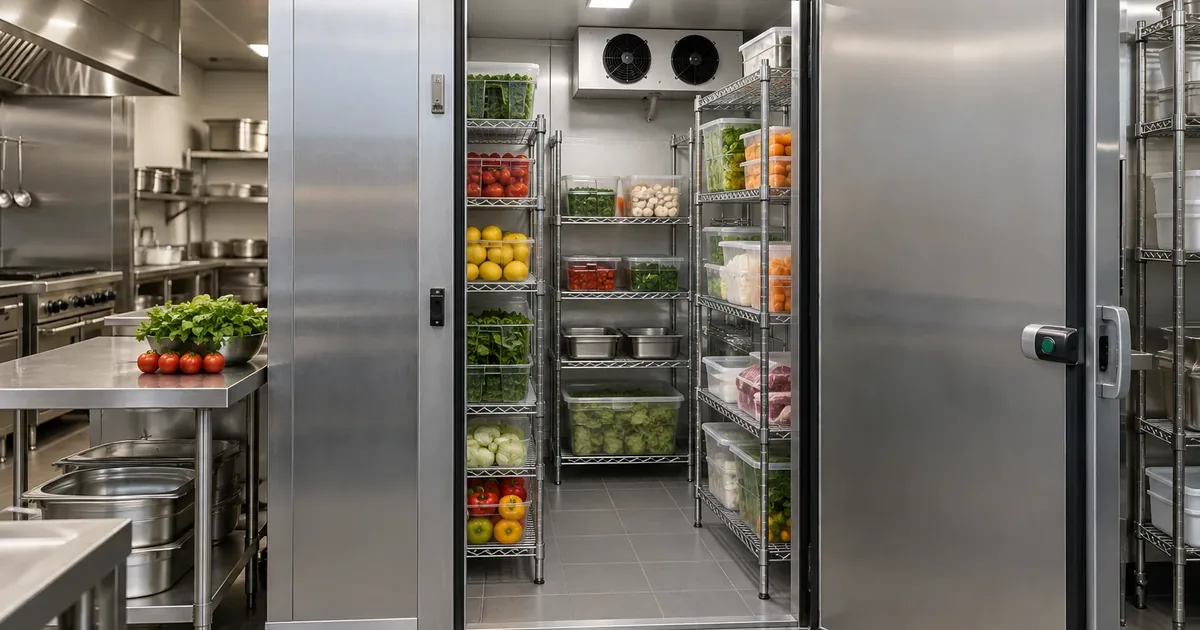
A customer got sick and you cannot prove the cooler held a safe temperature that day, and now your restaurant is facing a health department investigation with nothing but memory to defend it. Continuous refrigeration monitoring closes that gap, turning temperature into a permanent, timestamped record instead of a guess.
By Kevin Keithley, Director of Marketing, Swift Sensors
What Happens When a Customer Got Sick and You Cannot Prove the Cooler Held?
When a customer gets sick and you cannot prove the cooler held a safe temperature at the time, the complaint itself stops being the real problem. A report of food poisoning after a meal at your restaurant typically triggers three separate reviews at once: an internal look at what was served and how it was stored, a health department follow-up if the customer files a complaint, and potentially a liability claim from an attorney representing the customer. Each review asks the same underlying question: did your walk-in, reach-in, or prep cooler hold a safe temperature on the day the food was handled? If the honest answer is "we check it once or twice a shift," you are relying on a handful of data points to cover 24 hours, and that gap is where fault tends to get assigned by default rather than by evidence.
What Records Prove Your Cooler Held a Safe Temperature the Day Someone Got Sick?
The records that matter carry a timestamp on every reading, not a single checkmark logged at the start of a shift. For cold holding, a safe walk-in cooler or reach-in fridge generally runs at 41°F or below, per FDA Food Code guidance, with freezer units held at 0°F or below. The same temperature control requirements cover hot holding and cooling, so the records for those procedures belong in the same file. Proving a unit stayed in that range on a specific date requires either a continuous paper log with an entry for every check, or continuous digital logging that records temperature automatically at set intervals, every few minutes, around the clock, including overnight and over weekends when no one is on site. Without that continuous record, an investigator or attorney has no way to rule out a temperature excursion overnight, during a closed weekend, or in the middle of a rush when staff fell behind on manual checks.
How Long Should You Keep Refrigerator and Walk-In Cooler Temperature Logs?
Most food safety guidance suggests keeping refrigeration temperature logs for at least one year, and food liability attorneys generally advise holding onto them longer, often matching your state's statute of limitations for personal injury claims, which can run two to three years or more depending on the state. A foodborne illness claim rarely surfaces the same week the food was served; symptoms usually show up days later, and a formal claim can land months afterward. If your logs live on paper in a binder that gets cleared out each quarter, or in a spreadsheet nobody backs up, you may have nothing to produce by the time a claim actually arrives. Retention has to be planned around the timeline of a claim, not the size of your filing cabinet.
Can Handwritten Temperature Logs Hold Up in a Foodborne Illness Investigation?
Handwritten logs can hold up, but they carry weaknesses that investigators and opposing attorneys are trained to look for. A log filled in all at once at the end of a shift, in the same pen, with suspiciously round numbers, reads as reconstructed rather than real time. When a health inspector responds to a food poisoning complaint, they typically ask for the refrigeration logs covering the days in question, cooling and reheating logs for any implicated menu items, receiving temperatures for the ingredients used, and any staff illness reports from the same period. Gaps, skipped days, or a log that stops right at the date in question raise more questions than they answer. A continuous, automatically timestamped record removes the "was this filled in after the fact" question entirely, because a sensor captured the data, not a person writing from memory.
How Does Automatic Temperature Monitoring Protect You From a Liability Claim?
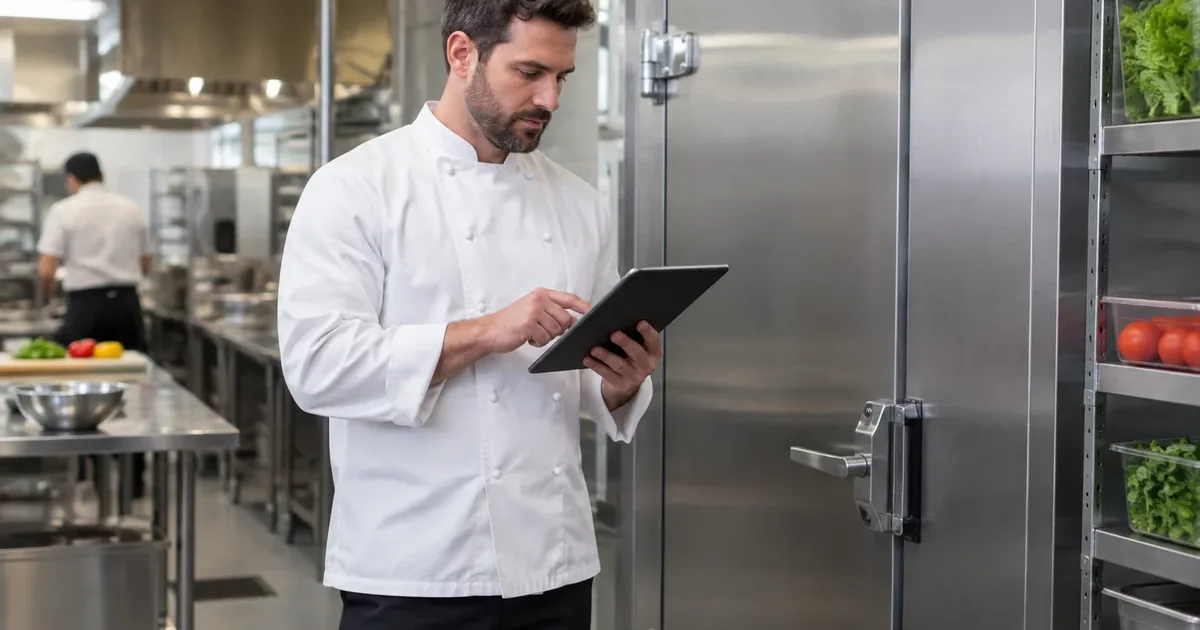
Automatic monitoring changes what happens the moment a temperature drifts out of range, instead of the moment someone happens to notice. Continuous restaurant temperature monitoring places wireless temperature sensors in each cooler, walk-in, and reach-in unit, reporting readings on a set interval and sending instant alerts via email, SMS, or phone call the moment a unit moves out of range, so staff can respond before food is compromised rather than discovering the failure a full shift later. That same stream of data becomes your evidence. Without that history, fault is easier to assign by default than by evidence, and a complete temperature history showing the cooler held is one of the strongest facts you can put in front of an investigator or an attorney. Continuous visibility, always on, protects the business whether or not anyone was physically checking a thermometer at the time.
Do Health Departments Accept Digital Temperature Monitoring Data as Valid Records?
In most jurisdictions, yes. Local health departments generally accept digital and automated temperature records as valid documentation, provided they are complete and show when each reading was taken. Many inspectors find them more credible than a handwritten log, because a sensor recorded the reading rather than a person writing from memory, and they give you documented proof that your food safety procedures were followed. A local health department reviewing a food poisoning complaint wants a complete, credible picture of what your equipment was actually doing, not a specific file format. The Swift Sensors Cloud Console adds exportable history on top of that: a downloadable record covering exactly the date range an inspector or attorney asks for, pulled with no disruption to daily operations. The Console keeps reading history for up to five years, which outlasts most claim timelines, and staff can add a note to an alert record documenting who responded and what they did, so the corrective action sits next to the reading it answered. That combination, continuous data plus an easy export, is what turns a routine complaint into a quick resolution instead of a drawn out dispute.
Frequently Asked Questions
What should you do immediately if a customer reports getting sick after eating at your business?
Document the complaint in writing the same day, including what the customer says they ate and when, then pull your temperature records for that date right away, before logs get overwritten or thrown out. Notify your manager on duty and, if the complaint is serious or the customer mentions a doctor visit, loop in your insurance carrier early. Avoid admitting fault; focus on gathering and preserving records while the details are fresh.
What does a health inspector ask for after a food poisoning complaint?
Expect a request for refrigeration and freezer temperature logs, cooking and reheating logs for the specific menu items involved, receiving temperatures for the ingredients used, and staff illness reports from around the same period. Inspectors usually want records covering several days before the complaint date, not just the day itself, since foodborne illness incubation periods vary and the source may trace back further than the meal the customer remembers.
What is considered a safe temperature range for a walk-in cooler or reach-in fridge?
The FDA Food Code generally calls for refrigerated storage at 41°F or below, with frozen storage at 0°F or below, to keep potentially hazardous foods out of the temperature danger zone where bacteria multiply quickly. Your local health department may enforce its own specific thresholds, so confirm the exact numbers required in your jurisdiction rather than relying on a general rule alone.
Can a restaurant be held liable for food poisoning without proof of a temperature failure?
It can. These disputes often turn on which side has better records. Without continuous temperature data for the period in question, it is much harder to show that a temperature excursion did not happen. Complete, timestamped records are what let a restaurant show the cooler held safe temperatures throughout the relevant window, which lowers that risk considerably. This is general information, not legal advice, so talk to your attorney or insurer about any specific claim.
How long should you keep food temperature logs for legal protection?
Most food safety guidance points to at least one year, but legal exposure typically runs longer, often two to three years depending on your state's statute of limitations for personal injury claims. Because a foodborne illness claim can surface months after the meal in question, keeping logs only through the current quarter or season can leave you without records by the time a claim arrives.
Get Continuous Proof Your Cooler Held, Before You Need It
The best time to build a defensible temperature record is before a complaint ever comes in, not after one lands on your desk. Explore food service temperature monitoring to see how continuous, timestamped data keeps your coolers, walk-ins, and reach-in units on record around the clock.

