
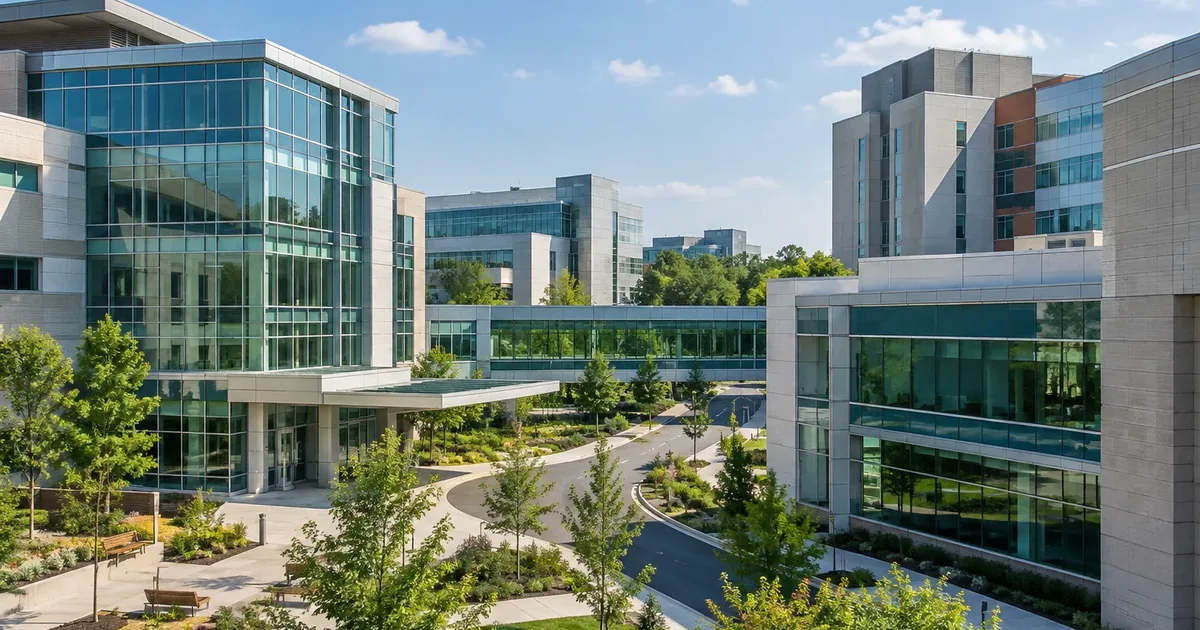
One dashboard for lab freezers across several buildings replaces the patchwork of building-specific logs, sticky-note temperature checks, and separate login screens that make multi-site cold storage hard to trust. A shared Swift Sensors scientific lab monitoring setup pulls every ultra-low freezer, refrigerator, and incubator into one continuously monitored view, no matter which building houses it.
By Kevin Keithley, Director of Marketing, Swift Sensors
Building One Dashboard for Lab Freezers Across Several Buildings
Ultra-low temperature (ULT) freezers, lab freezers, and refrigerators across every building can report to the same screen once every site is on the same account. When facilities and quality managers ask what a single dashboard for multi-site monitoring actually looks like, the honest answer is: one screen, one login, and every freezer visible no matter which building it sits in.
That's the operating principle behind one dashboard for lab freezers across several buildings, and it's what continuous temperature monitoring across an organization should feel like. Readings from every wireless sensor route to the same Swift Sensors Cloud Console, tagged by building, room, and asset, so a facilities director in Building A sees the same real-time temperature data as a lab manager reviewing samples in Building C.
Instead of separate spreadsheets or three different vendor logins, staff see current temperature, humidity, or door-open status for every can't-fail asset from wherever they are. Historical temperature records for each freezer stay attached to that freezer's own profile, which matters when an auditor asks for six months of continuous data on one specific ULT freezer instead of a folder of exported files pulled from four different systems. That continuous, always on visibility is what turns four separate building logs into data-driven decisions made from one screen.
How to Monitor Lab Freezers in Different Buildings From One Central Dashboard
Monitoring lab freezers in different buildings from one central dashboard comes down to a simple structure repeated at each site: wireless sensors placed inside each ULT freezer, lab freezer, refrigerator, or incubator communicate over BLE5 to a gateway installed somewhere in that building, and the gateway pushes readings to the Swift Sensors Cloud Console over the internet. Each sensor pairs with a probe placed directly inside the chamber, so the reading reflects the true temperature inside the freezer, not just the room around it. A gateway installed at each site pairs the sensors on that floor into one dashboard for lab freezers across several buildings without requiring a dedicated IT project per location.
Location tagging is what keeps the picture usable once you're past one building. Every sensor gets assigned to a building, floor, and room during setup, so the dashboard filters and reports by location instead of dumping every reading from every site into one undifferentiated list. A lab manager pulling temperature records for an inspection can filter to their own building; a compliance officer reviewing the whole organization can view everything at once.
Covering Multiple Campuses and Off-Site Locations
Multi-site lab freezer monitoring works the same way whether the second location is one floor down or across town. Off-site facilities, satellite research labs, or a leased cold storage warehouse each get their own gateway and connect to the same account, so a can't-fail freezer at a remote site raises the same instant alerts via email, SMS, or phone call as one down the hall from the main lab. Distance between buildings does not change the monitoring logic, only how many gateways the deployment needs.
Network Setup for Connecting Freezer Sensors Across Buildings
Each building needs at minimum one gateway with an internet connection, whether that's the building's existing network or a dedicated line run for the monitoring system. Wireless sensors pair to the nearest gateway over Bluetooth 5, with a range of up to 100 meters line of sight or about 30 meters through walls and equipment, so larger buildings or those with dense concrete walls may need more than one gateway. Installation causes no disruption to daily operations: sensors mount to existing freezers, and gateways plug in without rewiring the facility. Swift Sensors systems are built to be easy-to-deploy and scalable, meaning a facilities team can add a building to an existing account without redesigning the setup already running elsewhere.
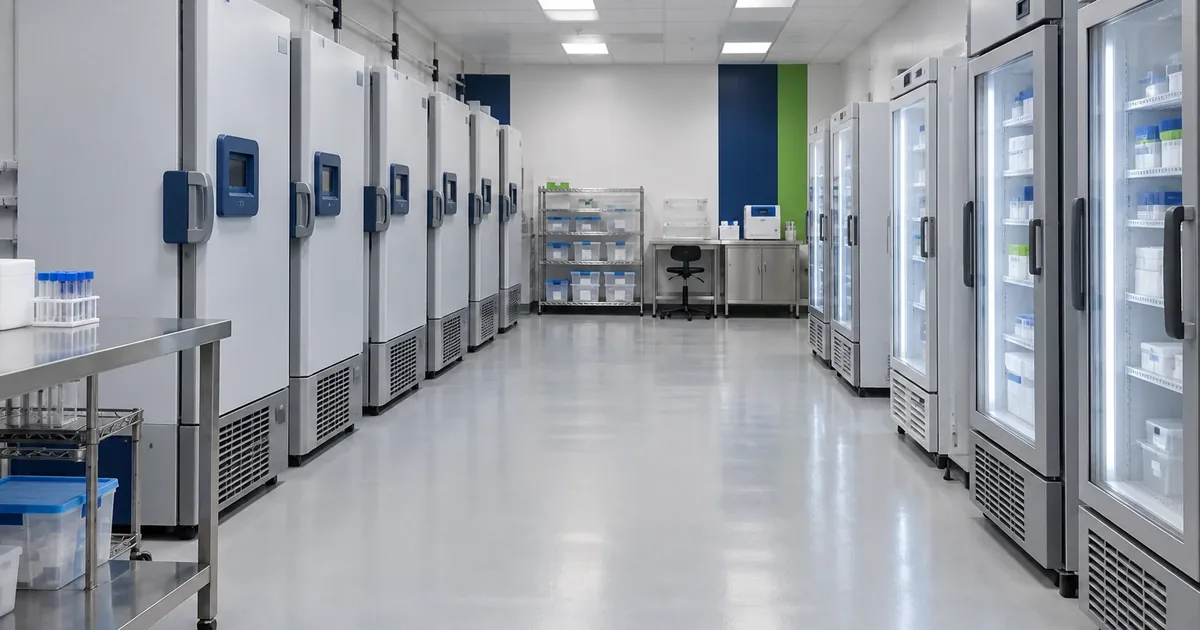
Managing Alerts and Notifications Across Multiple Sites
Alerts matter most in mission-critical moments, when a ULT freezer holding irreplaceable samples drifts out of range in the middle of the night. Multi-site lab freezer monitoring only works if that alert reaches the right person in the right building fast. Swift Sensors routes instant alerts via email, SMS, or phone call based on how each sensor and location is configured, so a temperature excursion at one site pages the staff responsible for that site first, with escalation paths for anyone who doesn't acknowledge in time.
Alert rules can differ by building and by asset. A general storage refrigerator might only need a standard out-of-range alert, while a vaccine refrigerator or a ULT freezer holding irreplaceable samples gets tighter thresholds and faster escalation. Because every alert also writes to that freezer's permanent temperature record, reviewing what happened during an excursion, and who was notified when, does not require piecing together separate logs from separate buildings.
Compliance for Lab Freezers Monitored Across Multiple Buildings
Compliance requirements don't relax just because freezers sit in different buildings. If anything, multi-building programs draw more scrutiny because auditors want to see that every site is held to the same standard. Continuous, timestamped temperature data collected the same way in every building helps support regulatory compliance with CAP, CLIA, and FDA 21 CFR Part 11 expectations for electronic records, though the exact documentation a given lab needs usually depends on its own accreditation and should be confirmed with that lab's compliance officer.
Wireless sensors and probes used for regulated cold storage should carry NIST calibration through an independent ANAB ISO 17025:2017 accredited laboratory, and that calibration record should be on file for the same freezer it monitors. Swift Sensors provides NIST calibration services through that kind of laboratory. Hospitals and clinical pharmacies also lean on the same shared dashboard for medical lab monitoring, where CAP and CLIA reviewers expect identical calibration and audit standards at every site. When every building reports into the same Cloud Console with the same calibration standard and the same audit trail format, an inspector reviewing one site can reasonably expect the others to look the same, which is usually the point of centralizing in the first place.
Scale and Access: How Many Freezers, Buildings, and Staff Views
One monitoring dashboard scales from a handful of ULT freezers in a single research lab to hundreds of sensors spread across dozens of buildings. The ceiling is set by how many gateways and sensors the account has, not by the software itself, so organizations that start with one lab freezer in one building typically add sites the same way they added that first sensor, without migrating to a different system later.
Shared visibility does not have to mean shared access to everything. Staff accounts can usually be scoped so a lab manager sees only their own building's freezers, samples, and alerts, while a facilities director or compliance officer views the full organization across every location. That separation matters operationally too: a busy lab does not want alerts from three other buildings competing for attention, and a compliance review goes faster when the person pulling records only sees what's inside their own scope.
Frequently Asked Questions
How much does multi-site lab freezer monitoring cost compared to per-building systems?
Swift Sensors does not publish system pricing because cost depends on the number of gateways, sensors, and buildings involved, and every monitoring plan is scoped to the deployment. What is comparable is what a shared system avoids: per-building systems duplicate gateways, logins, and setup work at every site, while one dashboard for lab freezers across several buildings shares infrastructure and cuts that duplication.
Do all buildings need to be on the same WiFi network to appear on one dashboard?
No. Each building's gateway only needs its own internet connection, whether through that building's WiFi, an ethernet line, or a separate network entirely. The Swift Sensors Cloud Console aggregates data from every gateway on the account regardless of which network delivered it, so buildings on completely separate IT infrastructure still show up on the same dashboard.
What happens to freezer monitoring at one building if that building's internet goes down?
The gateway at that building keeps polling its connected wireless sensors locally and holds those readings until the connection returns, then syncs the backlog to the Cloud Console automatically. Other buildings on the account are unaffected since each gateway operates independently. The gateway stores readings for as long as it has power, so pairing it with a backup power supply keeps that record intact through a power outage as well.
Is centralized multi-site freezer monitoring compliant with CAP, CLIA, or FDA 21 CFR Part 11 requirements?
Centralized monitoring helps support compliance with CAP, CLIA, and FDA 21 CFR Part 11 expectations by producing continuous, timestamped temperature records with consistent calibration standards across every building, rather than guaranteeing compliance outright. The exact documentation a lab needs still depends on its own accreditation, so labs should confirm requirements with their compliance officer alongside the monitoring data available.
Get One Dashboard for Every Building You Monitor
If your labs, pharmacies, or cold storage sites are still tracked building by building, start scoping one dashboard for lab freezers across several buildings with Swift Sensors wireless temperature sensors and see what continuous visibility looks like across your whole organization.

