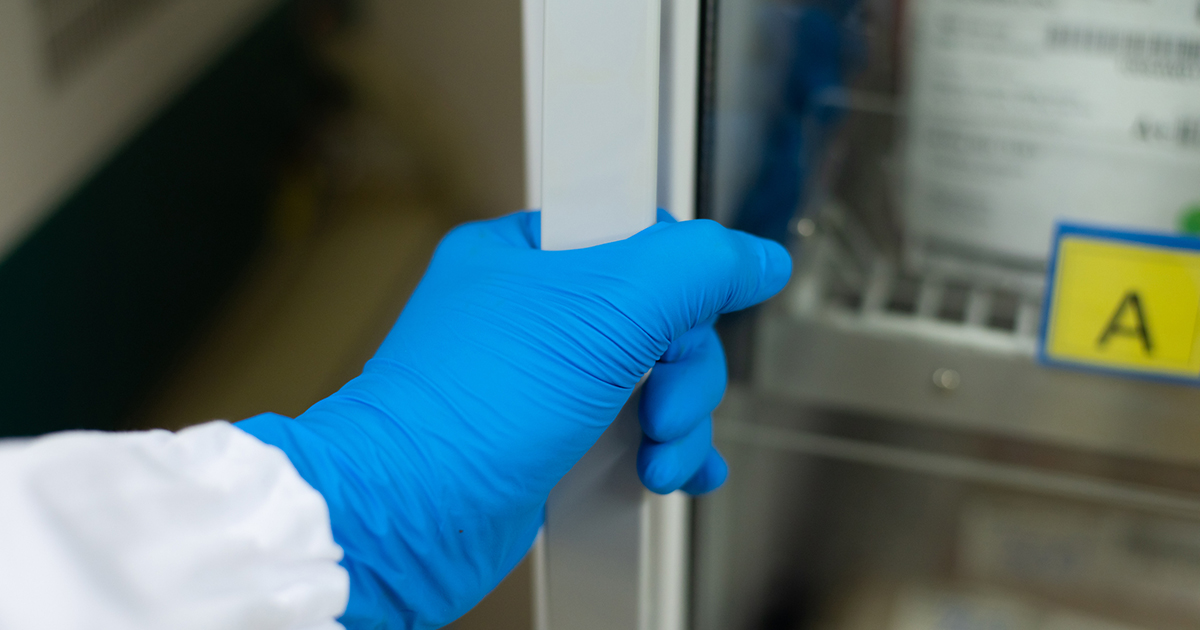
In a medical lab, temperature is the difference between a valid result and a costly do-over — or worse, a compliance failure. Irreplaceable patient biosamples, expensive reagents, and temperature-sensitive vaccines all depend on cold storage units holding precise ranges every hour of every day, including the overnight, weekend, and holiday windows when no one is watching. A single undetected excursion can invalidate samples, compromise test accuracy, spoil inventory, and put your accreditation at risk under CAP, CLIA, and CDC standards. In 2026, with tighter auditor scrutiny and rising reagent and vaccine costs, manual clipboard logs simply can’t deliver the coverage or the documentation labs are accountable for. This guide breaks down what medical lab cold storage monitoring looks like today, the standards you must meet, and how automated wireless temperature monitoring for medical labs protects both your samples and your compliance standing.
Table of Contents
- Why Medical Lab Cold Storage Monitoring Matters in 2026
- Compliance Standards Every Lab Must Meet
- The Real Cost of a Temperature Excursion
- How Wireless Temperature Monitoring Works
- What to Monitor in a Medical Lab
- Key Features to Look For in a 2026 Solution
- Choosing the Right Sensors for Your Lab
- Return on Investment for Medical Labs
- Getting Started with Swift Sensors
Why Medical Lab Cold Storage Monitoring Matters in 2026
Medical laboratories store assets that often cannot be replaced at any price. A single patient biosample may represent the only specimen available; a tray of reagents or vaccines may represent thousands of dollars and weeks of lead time. Unlike most cold storage, the failure mode here isn’t just spoilage — it’s invalidated test results, compromised diagnostics, and regulatory exposure.
The highest-risk hours are the ones no one is on site to catch: overnight, weekends, and holidays, when a failing compressor or a door left ajar can go undetected until staff return. Manual temperature logs — even diligent ones — only capture a snapshot once or twice a day, consume valuable technician time, and introduce human error. Continuous, automated monitoring closes those gaps by watching every unit 24/7 and alerting your team the instant a reading drifts out of range, so corrective action happens before samples are lost.
Compliance Standards Every Lab Must Meet
Clinical and research labs answer to layered oversight, and nearly all of it converges on one expectation: continuous temperature control with documented, defensible records. The core frameworks include:
- CAP (College of American Pathologists) accreditation. CAP checklists require that temperature-dependent equipment be monitored, that readings be documented, and that corrective action be taken and recorded when temperatures fall outside defined limits.
- CLIA (Clinical Laboratory Improvement Amendments). Federal CLIA requirements govern quality systems for labs testing human specimens, including proper storage of reagents and specimens at manufacturer-specified temperatures.
- CDC vaccine storage and handling (including VFC). The CDC sets the storage ranges for immunobiologics and recommends a continuous-recording digital data logger rather than relying on spot checks alone.
The temperature ranges these standards point to are precise. Refrigerated vaccines and many biologics must be held between 2°C and 8°C (36°F–46°F), with about 5°C (40°F) as the target. Frozen vaccines are stored between -50°C and -15°C (-58°F to +5°F), and certain products — including some mRNA vaccines — require ultra-cold storage near -80°C to -60°C. CDC guidance calls for minimum and maximum temperatures to be checked daily, and increasingly steers providers toward continuous digital monitoring. Automated logging from a medical lab temperature monitoring system replaces error-prone paper records with time-stamped, audit-ready reports that keep your lab inspection-ready year round.
The Real Cost of a Temperature Excursion
It’s easy to view monitoring as an expense until you weigh it against a single failure. When a unit drifts unnoticed, the costs compound quickly:
- Lost vaccines and medications, often replaced at premium prices and long lead times.
- Irreplaceable patient biosamples that cannot be recovered at any cost.
- Invalidated test results and the labor of re-testing and re-validating.
- Lost accreditation, regulatory fines, and resubmission costs.
- Damage to the lab’s reputation and client confidence.
- Potential legal exposure tied to compromised materials or service disruptions.
These aren’t hypothetical. Labs using continuous monitoring routinely report that a single after-hours alert — catching a power outage or a failing unit — saved thousands of dollars in inventory plus countless hours of retesting, paying for the system many times over in one event.
How Wireless Temperature Monitoring Works
A modern monitoring system has three simple parts and installs without rewiring your lab or running new cable.
- Wireless sensors. Compact, battery-powered sensors — each smaller than a credit card — sit inside refrigerators, freezers, ultra-low units, and cold rooms, taking continuous temperature (and, where needed, humidity) readings. Probe-style sensors can be placed in buffered solutions to reflect product temperature rather than air alone.
- A gateway. Sensors transmit readings over low-energy Bluetooth (BLE5) to a gateway, which relays the data securely to the cloud via ethernet, Wi-Fi, or cellular. A single Swift Sensors gateway supports up to 150 sensors within roughly a 500-foot radius.
- The cloud console. The platform stores readings, displays real-time analytics and trends, generates compliance reports, and pushes instant alerts by SMS text, email, or voice call the moment a unit moves out of range.
Swift Sensors devices offer a 6-to-8-year battery life and use 128-bit and 256-bit AES encryption end to end, so the system runs quietly in the background. You can see how a complete medical lab monitoring setup comes together here.
What to Monitor in a Medical Lab
A complete program covers every temperature-controlled environment where sensitive materials spend time, not just the largest unit. Common monitoring points include:
- Medical refrigerators. Vaccines, reagents, and specimens held in the 2–8°C range demand tight, continuous control to preserve potency and validity.
- Medical freezers. Frozen biologics and samples require stable sub-zero temperatures; sensors confirm units hold range even when the lab is empty.
- Cryogenic and ultra-low (-80°C) freezers. The most valuable and sensitive storage in the building — purpose-built ultra-low probes track these extreme ranges accurately.
- Cold rooms. Walk-in cold storage benefits from multiple sensor placements to catch uneven cooling and stratification before it affects inventory.
Thresholds, schedules, and alert rules can be customized per unit, so routine events — like a door opening during normal access — don’t trigger false alarms, while genuine excursions prompt immediate action.
Key Features to Look For in a 2026 Solution
Not every monitoring tool is built for the demands of a clinical or research lab. As you evaluate options, prioritize:
- Instant multi-channel alerts. Notifications by text, email, and voice so the right person is reached, even after hours.
- Automated, audit-ready reporting. Time-stamped records and trend data that satisfy CAP, CLIA, and CDC documentation expectations and support corrective-action logs.
- NIST-traceable calibration. Calibration through an accredited (ISO/IEC 17025) lab, with managed annual renewal, is what auditors look for in a clinical setting — a key differentiator over consumer-grade monitoring.
- Ultra-low temperature capability. Sensors rated for -80°C storage, not just standard refrigeration.
- Easy, no-wire deployment. Wireless sensors that install in minutes without disrupting lab operations.
- Strong data security. Encrypted communication and a closed sensor network to protect your data.
- Predictable, contract-free pricing. A straightforward plan priced by sensor count, with no long-term lock-in.
Choosing the Right Sensors for Your Lab
The right mix of sensors depends on what you store and the ranges you need to hold. A few workhorses for medical labs:
- Ambient temperature & humidity sensors for monitoring conditions inside refrigerators, cold rooms, and storage areas.
- Temperature sensors with a probe for accurate readings inside refrigerators and freezers, where a buffered probe better reflects product temperature than air.
- Ultra-low temperature probe sensors built specifically for cryogenic and -80°C freezers.
- High-temperature stainless-steel probe sensors for autoclaves, incubators, and water baths where the lab also needs to confirm heat thresholds.
Swift Sensors offers more than 30 sensor types that integrate into the same console, so you can start with cold storage monitoring and expand into humidity, door, power, and water detection over time. Explore the recommended sensors for medical labs to match the right device to each unit.
Return on Investment for Medical Labs
The math favors monitoring quickly. As a representative example, protecting two refrigerators and a freezer — including hardware, NIST calibration, and the monitoring plan — runs roughly $1,610 in year one and about $775 per year thereafter (annual NIST calibration plus monitoring). Compare that to the cost of a single excursion: lost vaccines or biosamples, invalidated results, retesting, fines, and the threat to accreditation. In many labs, the system pays for itself the first time it prevents a loss.
Beyond avoided losses, continuous monitoring reclaims the technician hours previously spent on manual logging and redirects that time toward testing and patient-facing work — while keeping the lab continuously inspection-ready rather than scrambling before an audit.
Getting Started with Swift Sensors
Protecting your samples, inventory, and accreditation doesn’t require an overhaul of your lab — it starts with putting continuous eyes on every cold storage unit, 24/7. Swift Sensors delivers easy-to-deploy wireless sensors, instant mobile alerts, automated compliance reports, NIST-traceable calibration, and a scalable cloud console built to protect clinical and research labs from a single refrigerator to a multi-site facility.
Ready to safeguard your samples and stay inspection-ready in 2026? Learn more about Swift Sensors wireless temperature monitoring for medical labs, and request a demo to see it in action.