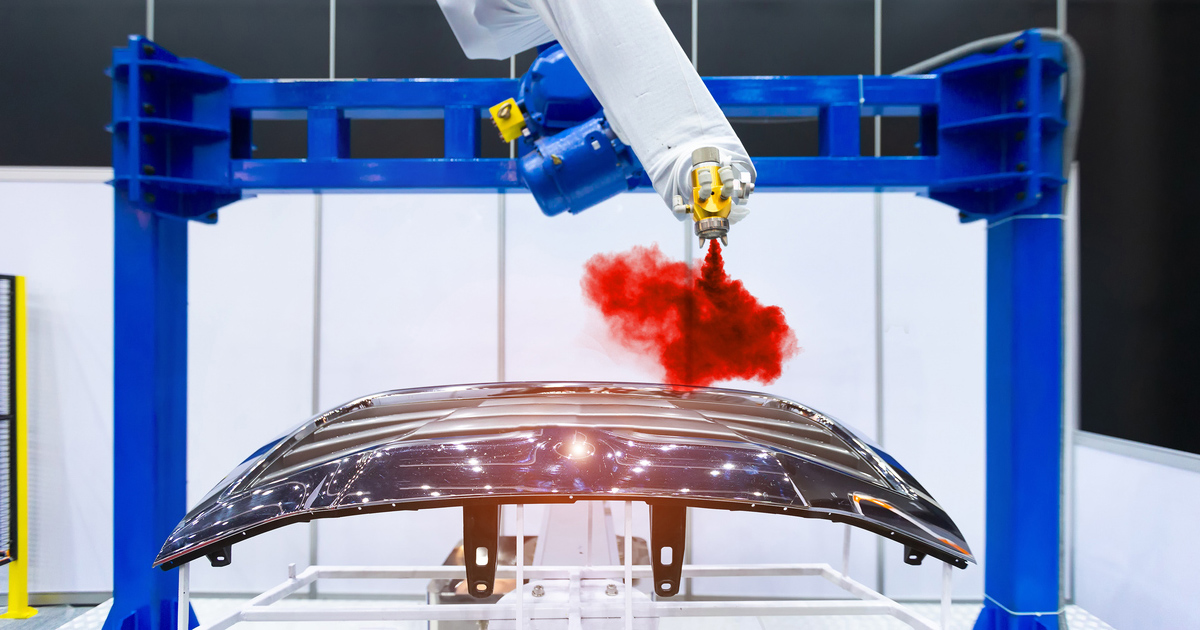
Paint booths are precision-controlled environments where temperature consistency directly impacts product quality, worker safety, and compliance requirements. In industrial manufacturing, even minor temperature deviations can lead to coating defects, increased safety risk, and costly rework. This article explains why temperature monitoring in paint booths is essential, the challenges manufacturers face, and how wireless temperature monitoring helps maintain optimal conditions while improving efficiency and visibility.
Table of Contents
- Why Temperature Monitoring Matters in Paint Booths
- Common Temperature Challenges in Industrial Paint Booths
- Risks of Manual and Traditional Monitoring Methods
- Benefits of Wireless Temperature Monitoring
- Key Temperature Points to Monitor
- Best Practices for Paint Booth Temperature Control
- How Wireless Sensors Improve Manufacturing Outcomes
- Conclusion
Why Temperature Monitoring Matters in Paint Booths
Temperature affects nearly every stage of the coating process, including atomization, flash time, drying, and curing. Paint and coating manufacturers specify recommended temperature ranges to help ensure proper application and consistent finish quality. When a paint booth operates outside those ranges, manufacturers can see defects such as poor adhesion, orange peel texture, blushing, bubbling, cracking, and color inconsistency.
Temperature monitoring also supports safety and compliance. Many paint processes involve solvents and flammable vapors, and elevated temperatures can increase vapor pressure and risk. On the other end, low temperatures can cause coatings to behave unpredictably, extending cycle times and increasing rework. Continuous monitoring provides a dependable record of conditions for quality programs, customer requirements, and internal audits.
Common Temperature Challenges in Industrial Paint Booths
Maintaining stable temperatures in a paint booth is not always straightforward. Common causes of temperature variation include:
- Seasonal shifts and ambient conditions that change the temperature of incoming air and the load on heating systems
- Door openings and part loading that introduce drafts and sudden changes in booth temperature
- Airflow imbalance caused by filter loading, fan wear, or duct issues that create hot and cold spots
- High throughput schedules that reduce recovery time between cycles
- Multiple zones where prep areas, spray zones, and cure zones each require different setpoints
Without continuous measurement, these conditions can drift slowly over time or spike suddenly during production, and both scenarios can affect finish quality and safety.
Risks of Manual and Traditional Monitoring Methods
Manual temperature checks provide only a snapshot, and problems often occur between readings. A short temperature excursion can still create defects, especially during critical windows like flash time or cure ramp. Manual logs can also be inconsistent across shifts, and they add labor that does not improve throughput.
Traditional wired systems can be effective, but they often come with tradeoffs. Installation may be disruptive, expansion can be expensive, and sensor placement may be limited by conduit paths and wiring constraints. In harsh environments, cables and connections can be a maintenance point that reduces long-term reliability.
Benefits of Wireless Temperature Monitoring
Wireless temperature monitoring provides continuous visibility without the complexity of extensive wiring. Sensors can be placed where data matters most, and readings are sent to a central dashboard for live viewing and historical reporting. This allows teams to respond quickly when conditions drift.
Key advantages include:
- Real time alerts when temperatures exceed set limits, allowing fast corrective action
- Continuous data capture for troubleshooting, process improvement, and root cause analysis
- Historical records that support audits, quality documentation, and customer reporting
- Flexible deployment that makes it easier to add sensors as processes evolve
- Remote visibility for supervisors, quality managers, and maintenance teams
Key Temperature Points to Monitor
The best sensor placement depends on your booth design and coating process, but most industrial paint operations benefit from monitoring a combination of the following:
- Booth interior air temperature near the spray zone to confirm application conditions
- Part temperature when feasible, especially for critical coatings or thick substrates
- Drying or curing zone temperature to validate cure profiles and reduce undercure risk
- Make up air temperature to verify incoming air conditioning performance
- Exhaust air temperature to help identify airflow issues or abnormal heat behavior
- Hot spot and cold spot checks in corners or near doors where stratification is common
A practical approach is to start with a few strategic points, then expand coverage after reviewing trends and identifying where variation occurs.
Best Practices for Paint Booth Temperature Control
Temperature monitoring delivers the most value when paired with clear operating practices. Consider these best practices:
- Define acceptable ranges for each stage, including prep, spray, flash, and cure
- Use alert thresholds that prompt action before defects occur, not after
- Standardize responses with a simple playbook for operators and maintenance teams
- Review trends weekly to catch slow drift from filter loading, fan wear, or heater performance
- Correlate temperature data with quality outcomes to refine setpoints and reduce rework
- Document calibration and maintenance for sensors and booth equipment to support audits
Over time, consistent monitoring and review can reduce variability, improve first pass yield, and stabilize cycle times.
How Wireless Sensors Improve Manufacturing Outcomes
For industrial manufacturers, the impact of paint booth temperature control shows up in measurable outcomes:
- Higher first pass yield by reducing temperature-related defects and rework
- Lower scrap and consumables waste from fewer rejected parts and less repainting
- Faster issue detection with automated alerts that reduce downtime and troubleshooting time
- Better coordination across operations, quality, and maintenance through shared visibility
- Stronger documentation for internal quality systems and external customer requirements
Wireless monitoring is especially valuable in facilities with multiple booths, frequent changeovers, or high mix production where conditions can vary across zones and schedules.
Get Started Today
Temperature monitoring is a practical lever for improving paint booth performance in industrial manufacturing. With continuous data, teams can catch excursions early, reduce defects, and build a reliable record of process conditions. Wireless temperature sensors make it easier to place monitoring where it matters, scale coverage over time, and maintain visibility across shifts and locations.
If you are looking to reduce rework, improve consistency, and strengthen process control in your paint booth operations, modern wireless temperature monitoring is a strong next step.