Table of Contents
- The School Vaping Problem Has Not Gone Away
- What Swift Sensors and HALO Have in Common
- Swift Sensors vs. HALO Smart Sensor: Side by Side
- Wireless vs. Wired: The Deployment Difference
- No Cabling Means Lower Cost and a Faster Rollout
- Privacy: No Camera, No Word Level Audio
- One Platform That Does More Than Vape Detection
- Alerts, Analytics, and Compliance Reporting
- Where the HALO Smart Sensor Fits
- Why Schools Choose Swift Sensors
- Frequently Asked Questions
The School Vaping Problem Has Not Gone Away
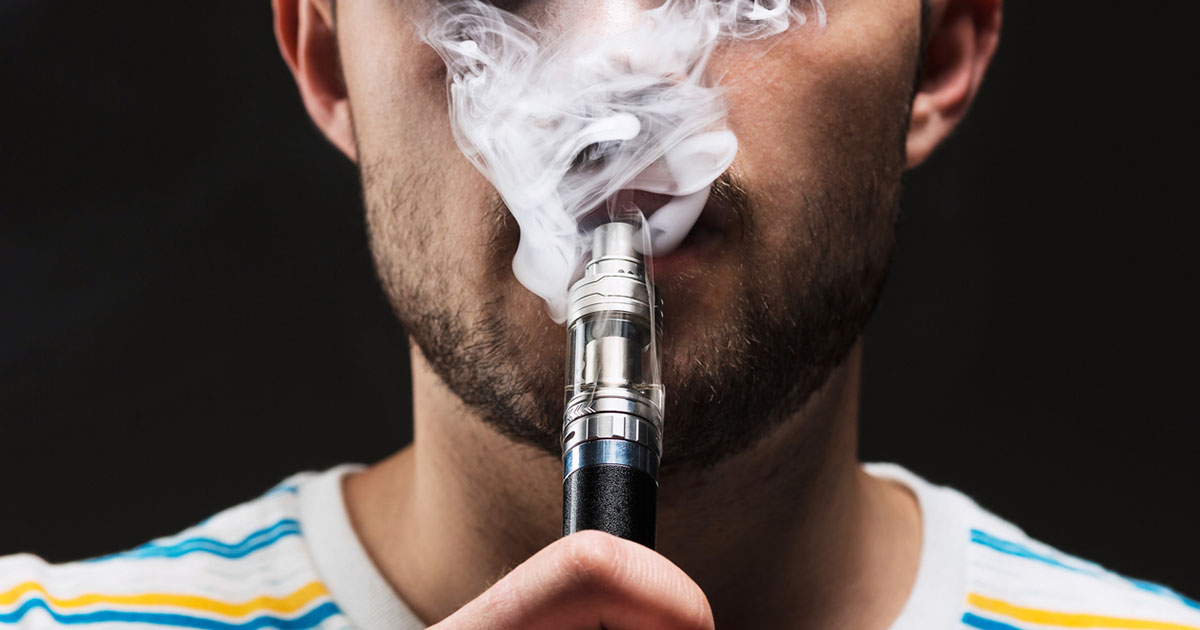
Vaping remains one of the most persistent discipline and health challenges in K-12 and higher education. E-cigarettes are small, easy to conceal, and produce aerosol instead of smoke, so traditional smoke alarms never catch them. Students gravitate to the exact places administrators cannot easily monitor: restrooms, locker rooms, and stairwells. These are also the places where cameras are prohibited for obvious privacy reasons.
That gap is why vape detection exists as its own category. A vape sensor earns its place in a bathroom precisely because it is not a camera. It watches the air, not the room. The question for most schools is no longer whether to deploy vape detection, but which system to standardize on. For a lot of districts, that decision comes down to Swift Sensors versus the HALO Smart Sensor.
What Swift Sensors and HALO Have in Common
It is worth being upfront about where the two products agree, because it is a lot. Both Swift Sensors and the HALO Smart Sensor:
- Detect vaping, including vaping with THC.
- Monitor indoor air quality alongside vape events.
- Operate without a camera and without video, so they belong in privacy areas.
- Send real-time alerts to staff when an event is detected.
- Provide tamper awareness and event reporting for policy enforcement.
If your only requirement is “detect vaping in a restroom without a camera,” either product will technically do the job. The reason schools end up preferring Swift Sensors Vape Detection System is everything that surrounds that core function: how the system installs, how far it scales, how it handles privacy, and how much it does beyond vape detection alone.
Swift Sensors vs. HALO Smart Sensor: Side by Side
Here is a quick reference on the differences that matter most to a facilities or safety team. Specifications are drawn from each manufacturer’s published materials.
| Capability | Swift Sensors | HALO Smart Sensor |
|---|---|---|
| Connectivity | Wireless. Bluetooth 5, battery powered sensors to a gateway | Wired. Cat5e or Cat6 with Power over Ethernet |
| Cabling required | None. Fully wireless to every sensor | Yes. A network drop must be run to every unit |
| Installation | Fast and low disruption, no ceiling cutouts | 5 inch ceiling cutout, structured cabling, integrator recommended |
| Campus scalability | Add a sensor anywhere in range, 30+ sensor types on one console | Each unit needs its own cable drop and switch port |
| Vape and THC detection | Yes, also includes a calculated Vape Index probability | Yes. |
| Air quality monitoring | Yes. Full indoor air quality across campus | Yes |
| Privacy footprint | No camera, no word level audio, no PII | No camera or video, but includes microphones for audio analytics |
| Beyond vape detection | 30+ wireless sensors for temperature, humidity, water leak, and more | More modalities in one box: gunshot, aggression, keyword, people counting |
| Alerts | Email, SMS, phone call, and mobile app | Email, push, on device LED and speaker, relay, VMS |
| Analytics and compliance | Real-time dashboard, trend reporting, timestamped audit trail | HALO Cloud dashboard, heat maps, reporting (subscription) |
| Data security | 128 bit AES sensor link, 256 bit AES to cloud, closed network | Cloud platform with VMS and BACnet integrations |
| Ongoing cost drivers | Monitoring plan on one platform | Cloud subscription, plus cabling and integrator labor per site |
Wireless vs. Wired: The Deployment Difference
This is the single biggest difference between the two systems, and it drives almost everything else.
Swift Sensors is a wireless platform. Battery powered sensors communicate with a gateway over an encrypted Bluetooth 5 connection. Adding a new restroom, stairwell, or entire building means placing a sensor, not pulling a wire to it. A facilities team can bring locations online quickly and adjust placement later without touching the ceiling.
The HALO Smart Sensor is a wired device. Each unit is ceiling mounted and requires a five inch cutout plus a Cat5e or Cat6 cable run delivering Power over Ethernet. IPVideo, the manufacturer, recommends a professional security integrator handle installation, cabling, and calibration. HALO is a capable single device, but every location you want to cover is another cable run and another switch port on your network.
For a small pilot in one or two bathrooms, that difference is manageable. For a district trying to cover dozens of restrooms across multiple buildings, it becomes the deciding factor.
No Cabling Means Lower Cost and a Faster Rollout
The cost of a vape detection program is not just the sensors. With a wired system, you are also paying for the cable, the labor to run it through walls and ceilings, the switch ports and network capacity to support each device, and the integrator time to schedule and complete the work. In older school buildings, running new cable can be slow, expensive, and disruptive to classes.
Because Swift Sensors requires no cabling, the entire category of installation cost mostly disappears. There are no cable runs, no ceiling cutouts, and no integrator calendar to wait on. That translates directly into a lower total cost to get coverage in place and a faster path from purchase to a fully monitored campus. When budgets are tight and the vaping problem is immediate, getting live quickly matters.
Privacy: No Camera, No Word Level Audio
Both systems are camera free, and that shared quality is exactly why either one can go in a bathroom. Neither records video or captures personally identifiable images. This is the baseline expectation for any credible vape detector.
Swift Sensors goes a step further on audio. It detects noise as a signal level, but it never listens for words. The HALO Smart Sensor’s feature set includes spoken keyword detection and aggression detection, which rely on microphones running audio analytics. HALO states that it does not record audio, but it is still listening in order to analyze it.
For a school board, a parent group, or a community sensitive to the idea of any listening device inside a restroom, a sensor with no word level analytics is a far shorter and easier conversation. Swift Sensors carries no camera, no voice analytics, and no PII. It reads air quality and vape signals, and nothing else.
One Platform That Does More Than Vape Detection
Vape detection is often a school’s entry point into environmental monitoring, but it is rarely the only need. Walk-in coolers in the cafeteria, server rooms, water intrusion in basements and mechanical rooms, and indoor air quality across classrooms are all worth watching.
Swift Sensors runs more than 30 wireless sensor types on the same platform and the same dashboard. The vape detector in a restroom and the temperature sensor in the kitchen cooler report into one console, managed by one team. That consolidation is a genuine operational advantage: fewer vendors, one login, and a single monitoring plan.
The HALO Smart Sensor takes the opposite approach, packing more detection types into a single ceiling unit, including gunshot detection, aggression analysis, keyword alerting, and people counting. That in-unit breadth is real, and for some buyers it is the point. But it is focused on the one device in the one location, rather than a campus-wide environmental platform.
Alerts, Analytics, and Compliance Reporting
Detection is only useful if the right person hears about it fast. Swift Sensors sends real-time alerts by email, SMS, phone call, and mobile app, so staff can respond and intervene while it still matters. Its Vape Index calculates the probability that vaping is occurring, which helps reduce noise from false triggers.
Just as important for schools is documentation. Swift Sensors provides a real-time dashboard, trend reporting, and a timestamped audit trail of every detected event. That record is what administrators lean on during disciplinary proceedings and policy enforcement, and it helps identify vaping hotspots so you can adjust placement and target prevention efforts where they are needed most.
Where the HALO Smart Sensor Fits
To be fair, HALO is a strong product for the right buyer. If a district specifically wants gunshot detection, aggression analysis, and spoken keyword alerting combined into a single ceiling device, and it is already standardized on Motorola’s Avigilon video ecosystem, HALO fits neatly into that stack. Its multi-sensor, all-in-one design is a legitimate advantage for schools that want those capabilities in one unit and are prepared for a wired installation.
The trade off is cabling, per-location installation cost, an ongoing cloud subscription, and a device that is listening for audio events. For many schools, those trade offs outweigh the extra modalities.
Why Schools Choose Swift Sensors
When a district’s priority is getting reliable vape detection into every problem area quickly, affordably, and with the cleanest possible privacy story, Swift Sensors is the preferred choice. It delivers:
- No cabling. Fully wireless deployment with no cable runs or ceiling cutouts.
- Faster, lower-cost rollout. A whole campus goes live without integrator scheduling.
- A stronger privacy posture. No camera and no word level audio analytics.
- One platform for everything. Vape detection plus temperature, water, and air quality on a single dashboard.
- Enterprise-grade security. 128 bit AES on the sensor link, 256 bit AES to the cloud, and a closed network.
- Actionable alerts and compliance-ready reporting to support enforcement and prevention.
Same detection where it counts, without the wiring, the cost, or the listening device on the ceiling.
Frequently Asked Questions
Does Swift Sensors use a camera?
No. Swift Sensors has no camera and no video feed, which is why it can be deployed in restrooms, locker rooms, and stairwells where cameras are prohibited.
Do I have to run cabling for Swift Sensors?
No. Swift Sensors is fully wireless. Battery powered sensors connect to a gateway over Bluetooth 5, so there are no cable runs to any sensor. The HALO Smart Sensor, by contrast, requires a Cat5e or Cat6 network drop with Power over Ethernet at every unit.
Does Swift Sensors detect THC?
Yes. Swift Sensors detects vaping and vaping with THC, and it also monitors indoor air quality.
How is Swift Sensors different from the HALO Smart Sensor on privacy?
Both are camera free. The difference is audio. Swift Sensors reads noise levels but does not listen for words, while HALO includes microphones performing audio analytics such as keyword and aggression detection. HALO states it does not record audio, but a sensor with no word level analytics is often an easier fit for privacy-conscious communities.
Can Swift Sensors monitor more than vaping?
Yes. Swift Sensors offers more than 30 wireless sensor types, including temperature, humidity, and water leak detection, all managed on one dashboard. Many schools start with vape detection and expand into cafeteria refrigeration and facility monitoring on the same platform.
Schedule a demo and we will map the coverage your campus needs, restroom by restroom, and show you the alerts and compliance reporting live.